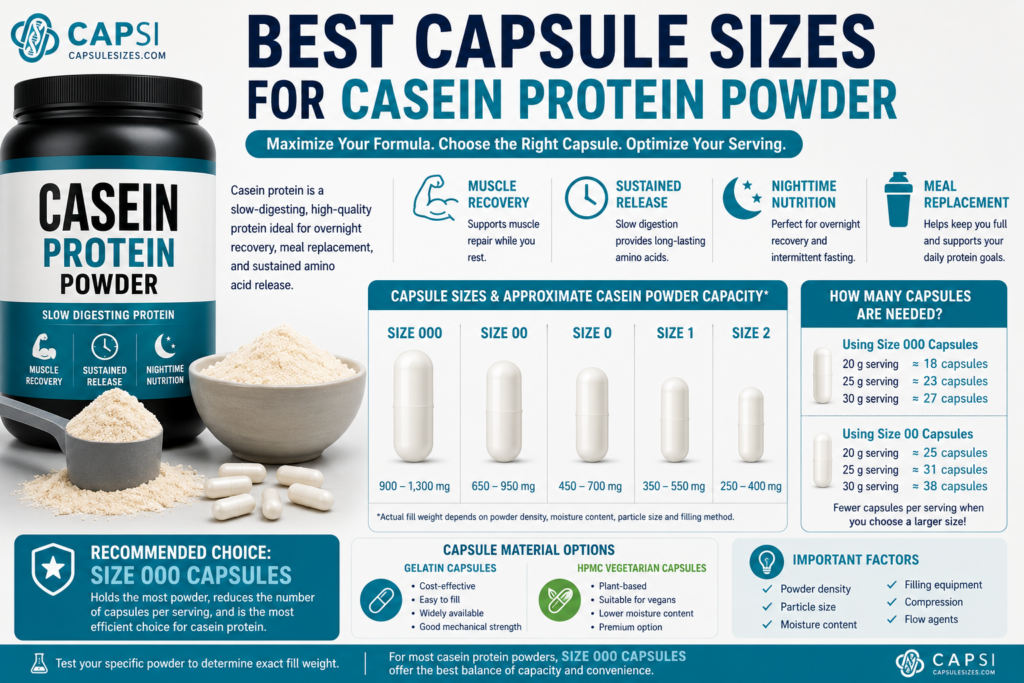
Casein protein powder is a popular slow-digesting dairy protein commonly used in sports nutrition, meal replacement supplements, and overnight recovery formulas. If you’re planning to encapsulate casein protein powder, choosing the correct capsule size is important because protein powders are relatively bulky and require a large number of capsules per serving.
What Is Casein Protein Powder?
Casein is the primary protein found in milk, accounting for approximately 80% of its protein content. Unlike whey protein, which is absorbed quickly, casein forms a gel-like substance in the stomach and releases amino acids gradually over several hours.
Many people choose casein protein supplements for:
- Overnight muscle recovery
- Sustained amino acid release
- Meal replacement formulas
- Sports nutrition products
- High-protein dietary supplements
Best Capsule Size for Casein Protein Powder
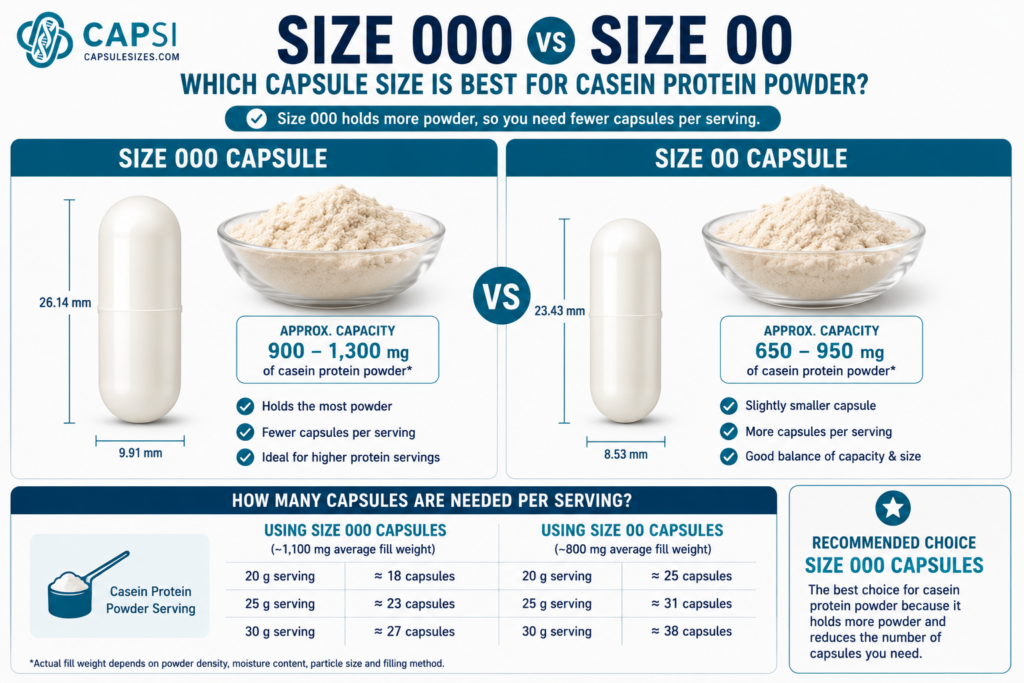
Because casein protein powder is relatively fluffy and has a low bulk density compared to many vitamin powders, larger capsules are generally preferred.
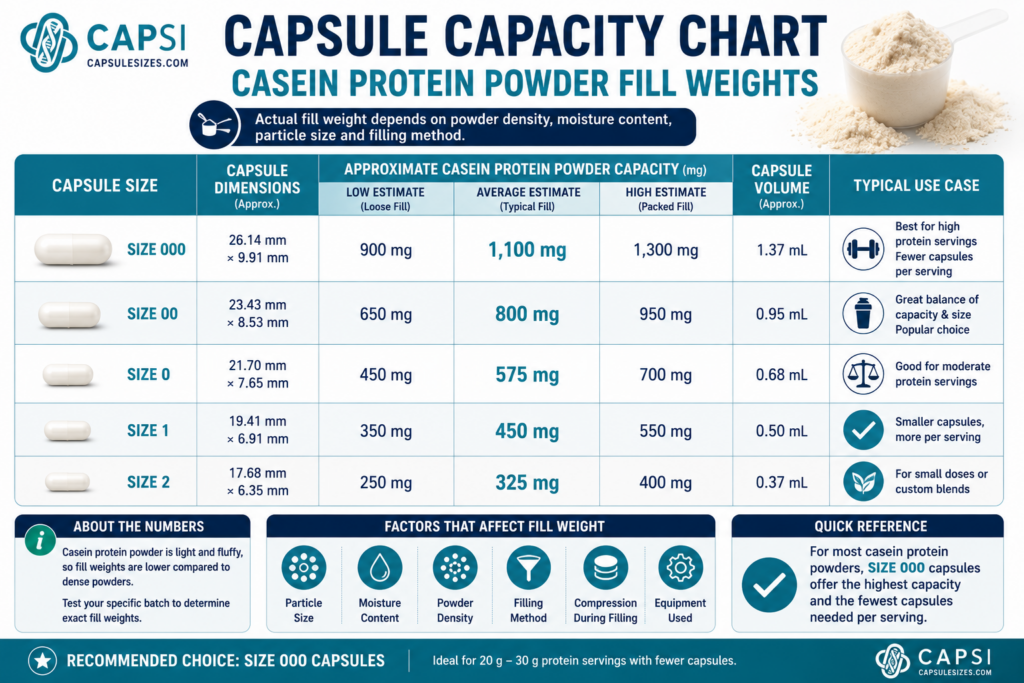
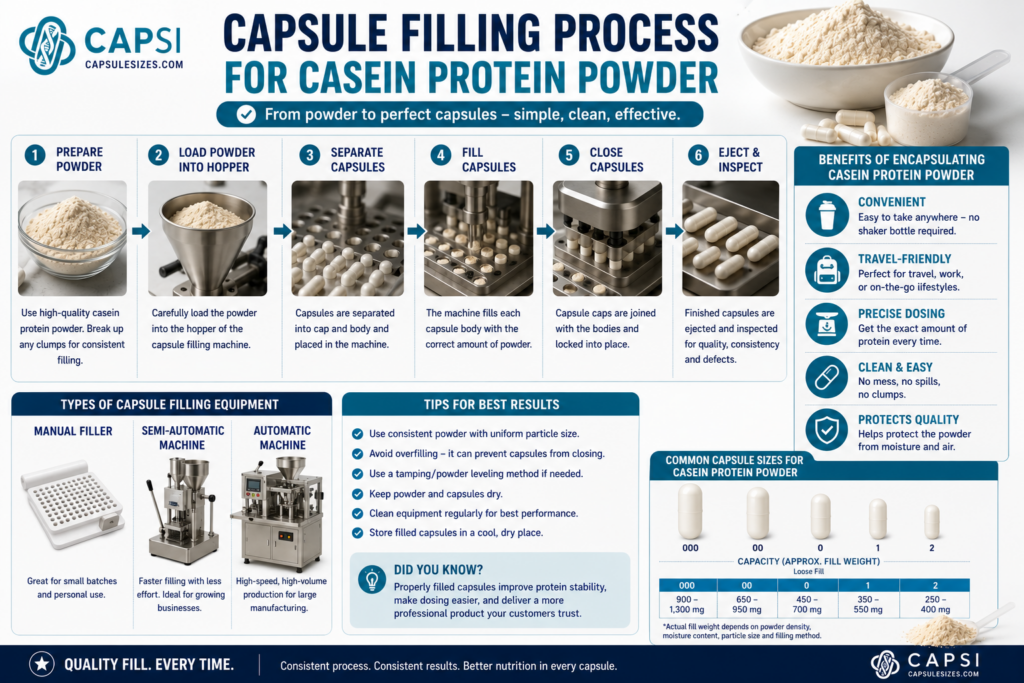
| Capsule Size | Approximate Casein Powder Capacity* |
|---|---|
| Size 000 | 900–1,300 mg |
| Size 00 | 650–950 mg |
| Size 0 | 450–700 mg |
| Size 1 | 350–550 mg |
| Size 2 | 250–400 mg |
*Actual fill weight depends on powder density, moisture content, particle size, and packing method.
Recommended Choice
For most casein protein powders:
Size 000 capsules are usually the best option because they hold the largest amount of powder and reduce the number of capsules required per serving.
Size 00 capsules are also commonly used when slightly smaller capsules are preferred.
How Many Capsules Are Needed?
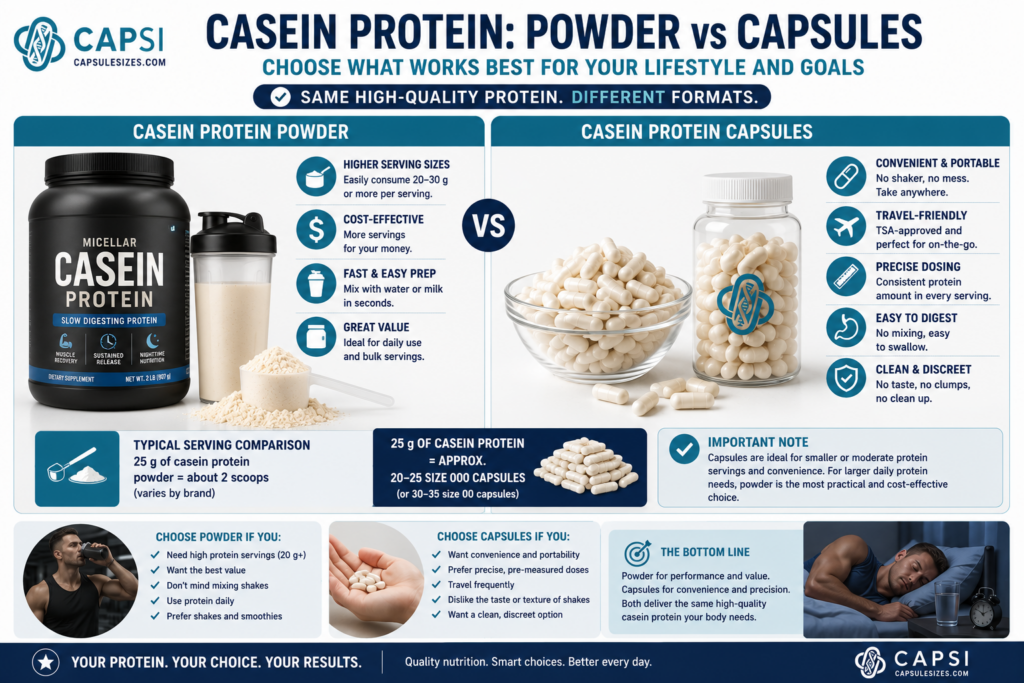
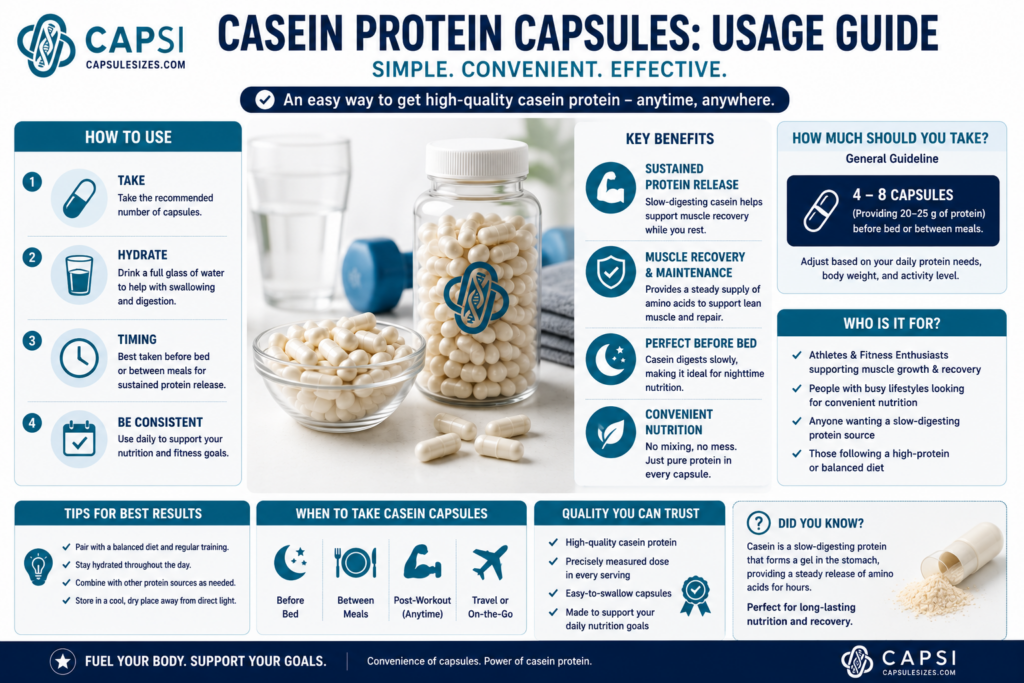
A typical serving of casein protein powder is between 20 g and 30 g.
Example Using Size 000 Capsules
Assuming 1,100 mg per capsule:
- 20 g serving = approximately 18 capsules
- 25 g serving = approximately 23 capsules
- 30 g serving = approximately 27 capsules
Example Using Size 00 Capsules
Assuming 800 mg per capsule:
- 20 g serving = approximately 25 capsules
- 25 g serving = approximately 31 capsules
- 30 g serving = approximately 38 capsules
This demonstrates why protein powders are usually sold in tubs rather than capsules. However, capsules can still be useful for smaller doses or custom formulations.
Capsule Material Options
Gelatin Capsules
Benefits:
- Cost-effective
- Easy to fill
- Widely available
- Good mechanical strength
HPMC Vegetarian Capsules
Benefits:
- Plant-based
- Suitable for vegetarians and vegans
- Lower moisture content
- Popular for premium supplement formulations
Both capsule types work well with casein protein powder.
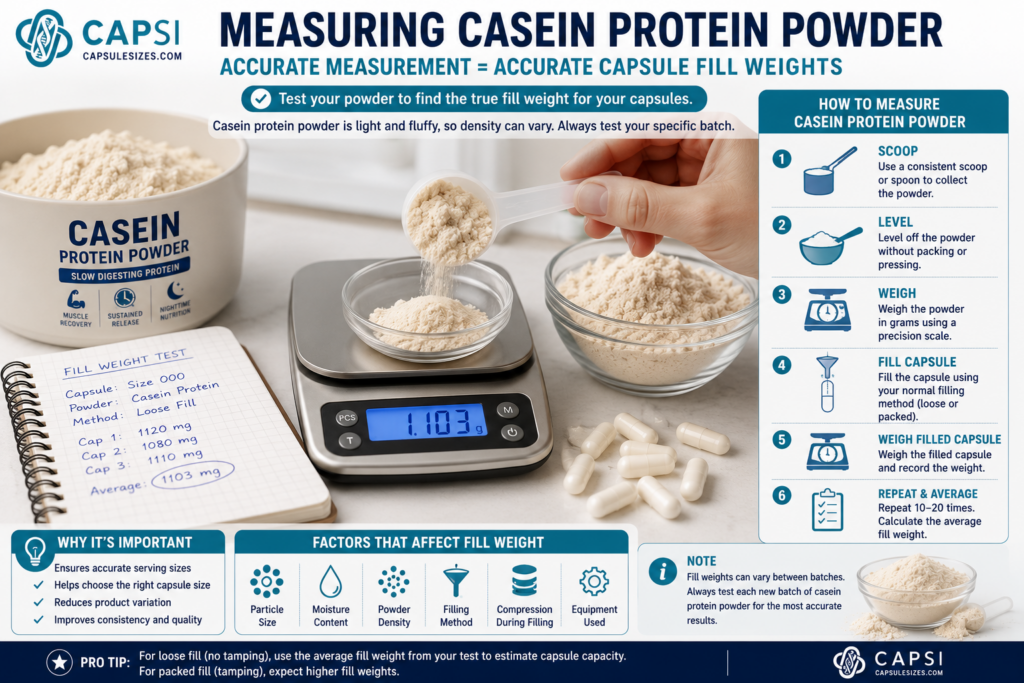
Factors That Affect Fill Weight
Several factors can change how much casein powder fits into a capsule:
- Powder particle size
- Powder density
- Moisture content
- Capsule filling equipment
- Compression during filling
- Presence of flow agents or additional ingredients
The best way to determine exact capacity is by performing a small filling test using your chosen batch of powder.
Is Encapsulating Casein Protein Practical?
For large daily protein servings, capsules are generally not practical because of the high number required.
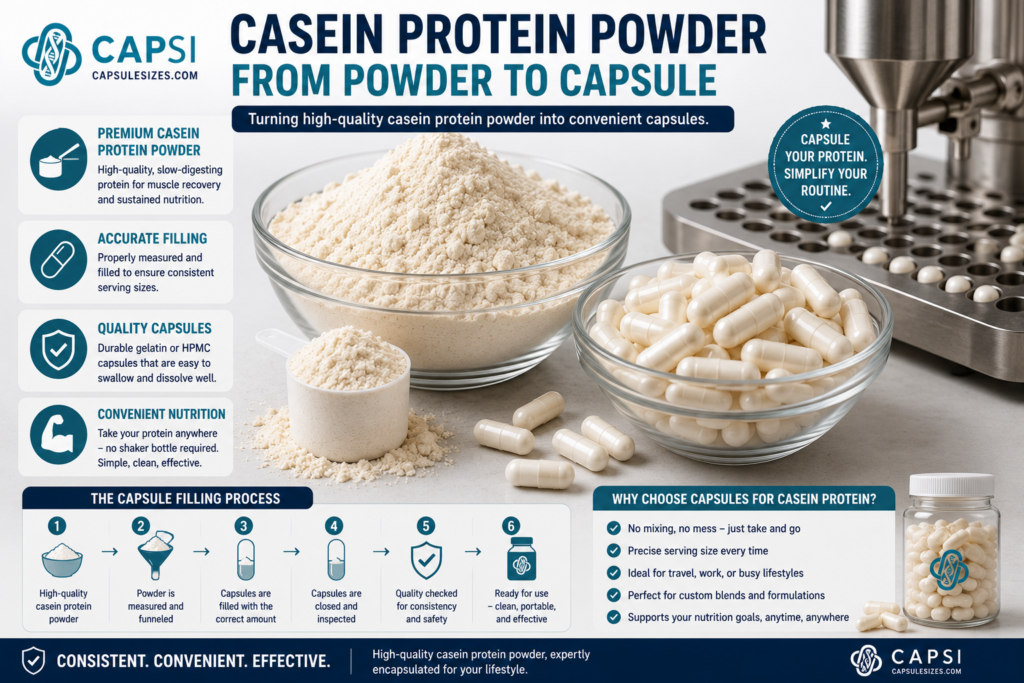
Capsules may be suitable when:
- Creating custom supplement blends
- Producing travel-friendly protein supplements
- Combining casein with other ingredients
- Using smaller serving sizes
- Developing sports nutrition formulations
For most applications, Size 000 capsules provide the most efficient solution.
Frequently Asked Questions
What is the best capsule size for casein protein powder?
Size 000 capsules are usually the best choice because they offer the highest fill capacity and require fewer capsules per serving.
Can casein protein fit into size 00 capsules?
Yes. Most casein powders can be filled into size 00 capsules, typically holding between 650 mg and 950 mg per capsule.
How many size 000 capsules equal 25 g of casein protein?
A 25 g serving generally requires around 20–25 size 000 capsules depending on powder density.
Are vegetarian capsules suitable for casein powder?
Yes. HPMC vegetarian capsules work very well with casein protein powder and are commonly used in supplement manufacturing.
Does micellar casein require different capsule sizes?
No. Micellar casein and standard casein powders generally use the same capsule sizes, although exact fill weights may vary depending on density and processing methods.