
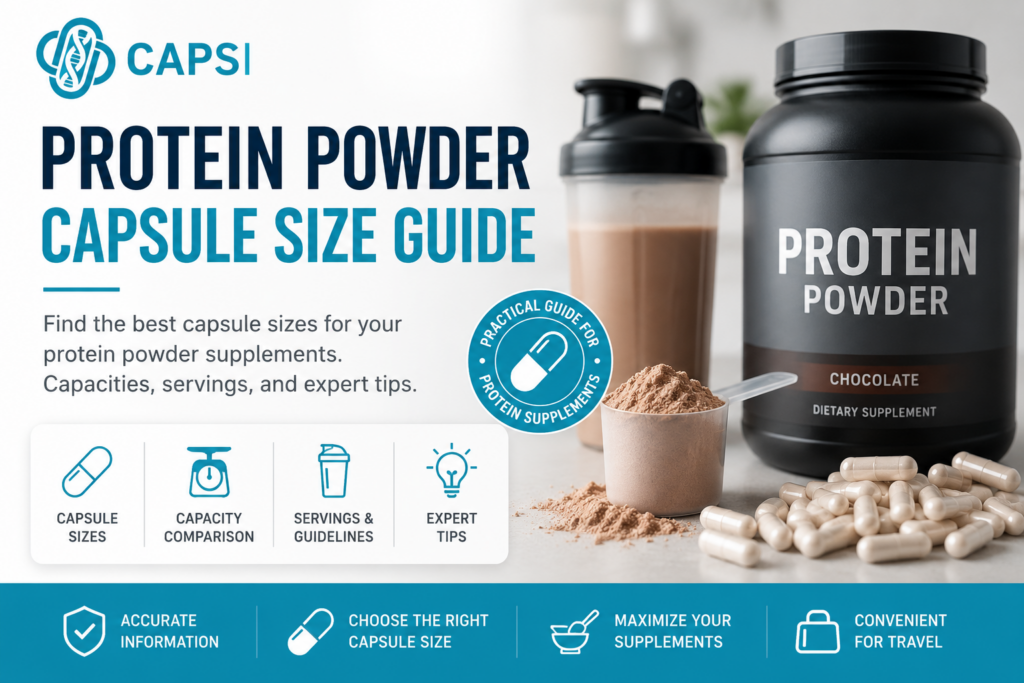
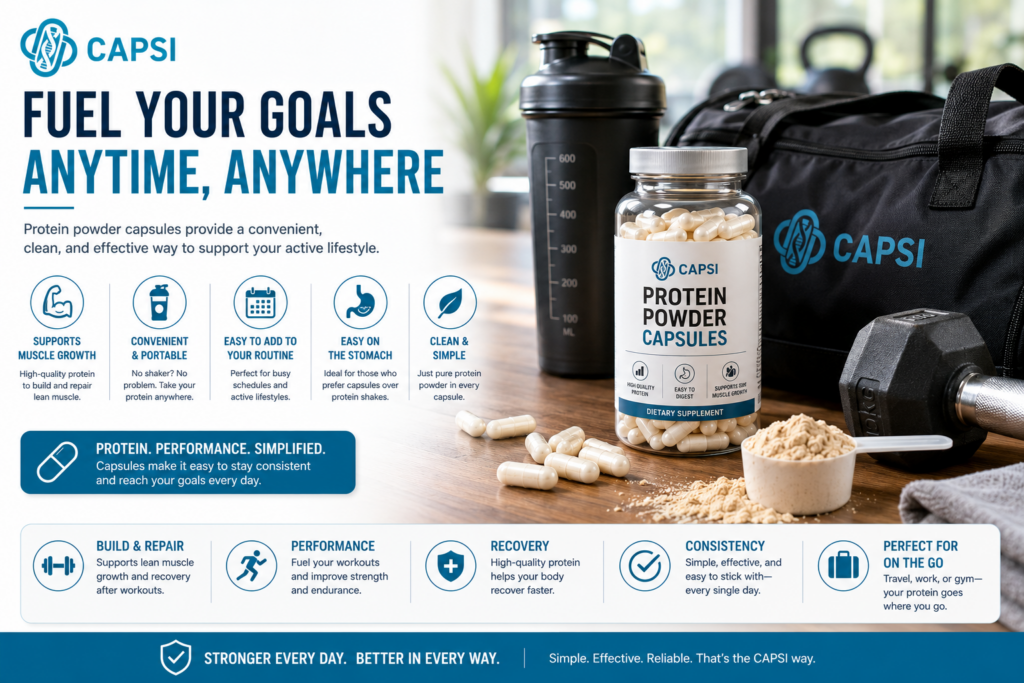
Protein powder is one of the most popular supplements used by athletes, gym-goers, and anyone looking to increase their daily protein intake. While protein powder is normally mixed into shakes, some people prefer to fill capsules for convenience when travelling or for taking smaller amounts throughout the day.
However, protein powders are relatively bulky ingredients, meaning they require larger capsule sizes and a significant number of capsules to achieve a meaningful serving size.
Can Protein Powder Be Put Into Capsules?
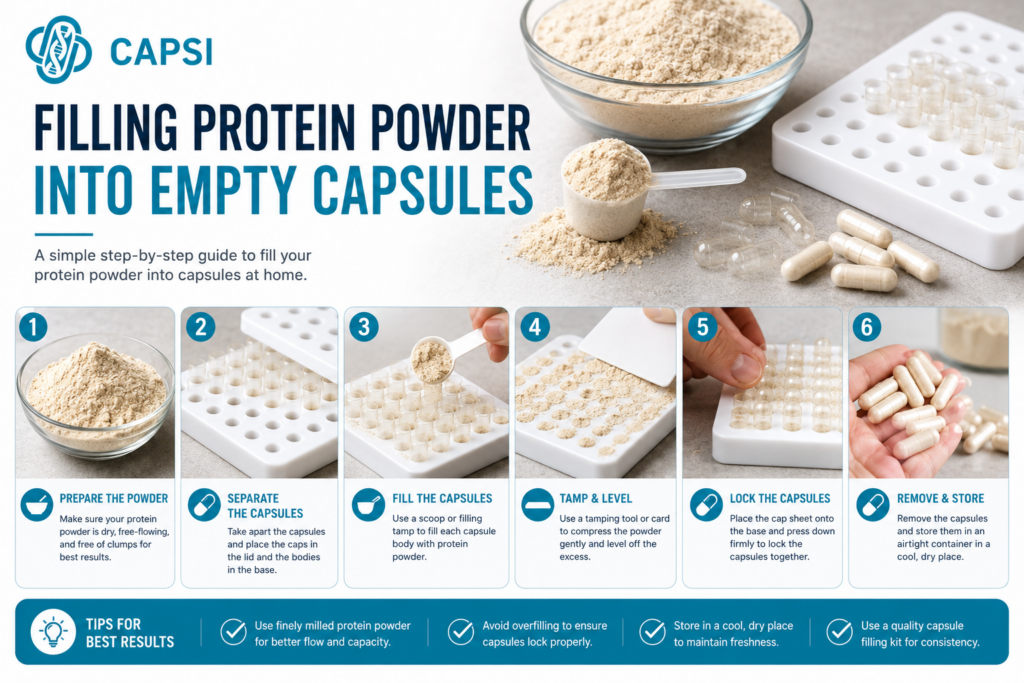
Yes, protein powder can be encapsulated, but the practicality depends on the serving size you need.
Most protein supplements are consumed in servings of 20–30 grams. Even the largest capsules can only hold a small fraction of this amount, meaning a full serving would require dozens of capsules.
For this reason, protein powder capsules are generally used for:
- Small supplemental doses
- Travel convenience
- Custom formulations
- Combining protein with other ingredients
- Taste-free consumption
Best Capsule Sizes for Protein Powder
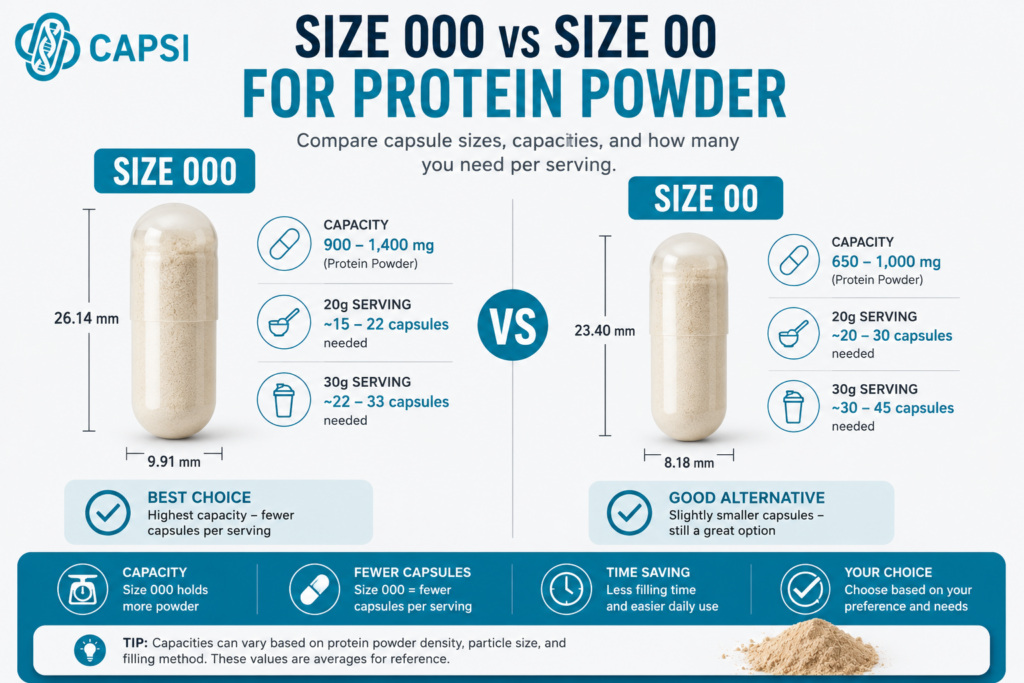
The best capsule size depends on the density and fineness of the protein powder. Most whey protein, casein protein, pea protein, and rice protein powders have similar filling characteristics.
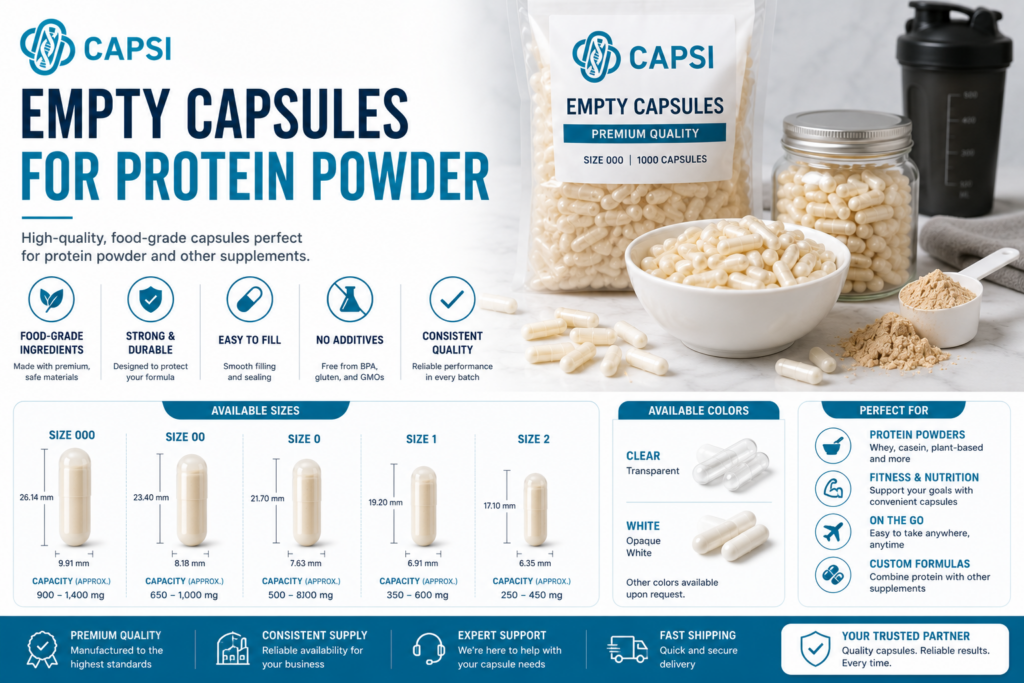
| Capsule Size | Approximate Capacity (Protein Powder) |
|---|---|
| Size 000 | 900–1,400 mg |
| Size 00 | 650–1,000 mg |
| Size 0 | 500–800 mg |
| Size 1 | 350–600 mg |
| Size 2 | 250–450 mg |
For most protein powders, Size 000 capsules are the preferred choice because they provide the largest capacity and reduce the number of capsules needed.
How Many Capsules Are Needed?
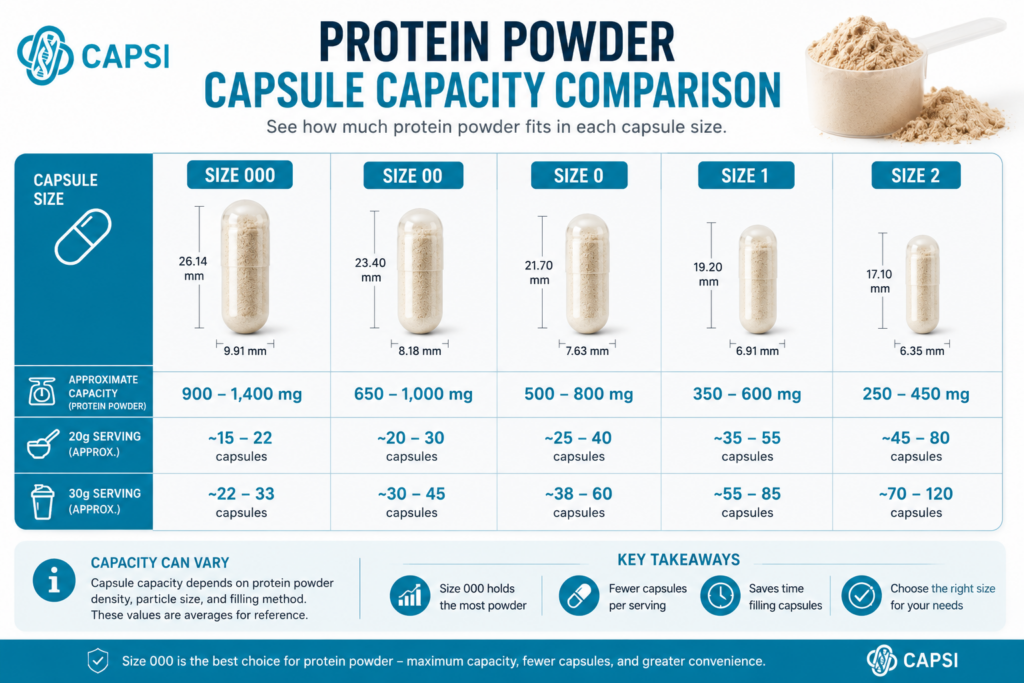
The exact number depends on powder density, but the following examples provide a useful guide.
For a 5g Serving
- Size 000: approximately 4–6 capsules
- Size 00: approximately 5–8 capsules
- Size 0: approximately 7–10 capsules
For a 20g Serving
- Size 000: approximately 15–22 capsules
- Size 00: approximately 20–30 capsules
- Size 0: approximately 25–40 capsules
For a 30g Serving
- Size 000: approximately 22–33 capsules
- Size 00: approximately 30–45 capsules
- Size 0: approximately 38–60 capsules
This demonstrates why protein powders are usually consumed as shakes rather than capsules.
Whey Protein Capsule Sizes
Whey protein concentrate and whey protein isolate generally fill well into capsules because they are finely milled powders.
Recommended capsule sizes:
- Size 000 (best option)
- Size 00
- Size 0
For anyone intending to encapsulate whey protein, Size 000 capsules provide the most practical solution.
Plant-Based Protein Capsule Sizes
Plant proteins such as:
- Pea protein
- Rice protein
- Hemp protein
- Pumpkin seed protein
- Soy protein
can also be encapsulated successfully. However, some plant proteins are fluffier and less dense than whey protein, which can slightly reduce capsule capacity.
In most cases, Size 000 remains the preferred capsule size.
Factors That Affect Protein Powder Capacity
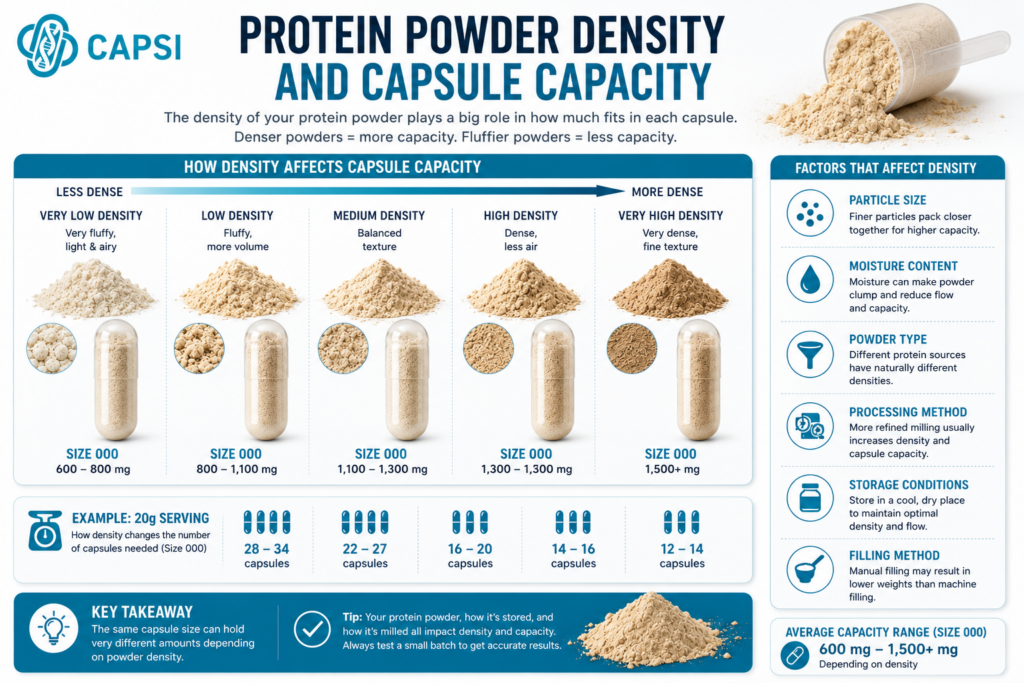
Several factors influence how much protein powder fits into a capsule:
Powder Density
Dense powders allow more weight to fit into the same capsule volume.
Moisture Content
Protein powders should remain dry to ensure proper filling and capsule stability.
Particle Size
Finely milled powders typically pack more efficiently than coarse powders.
Filling Method
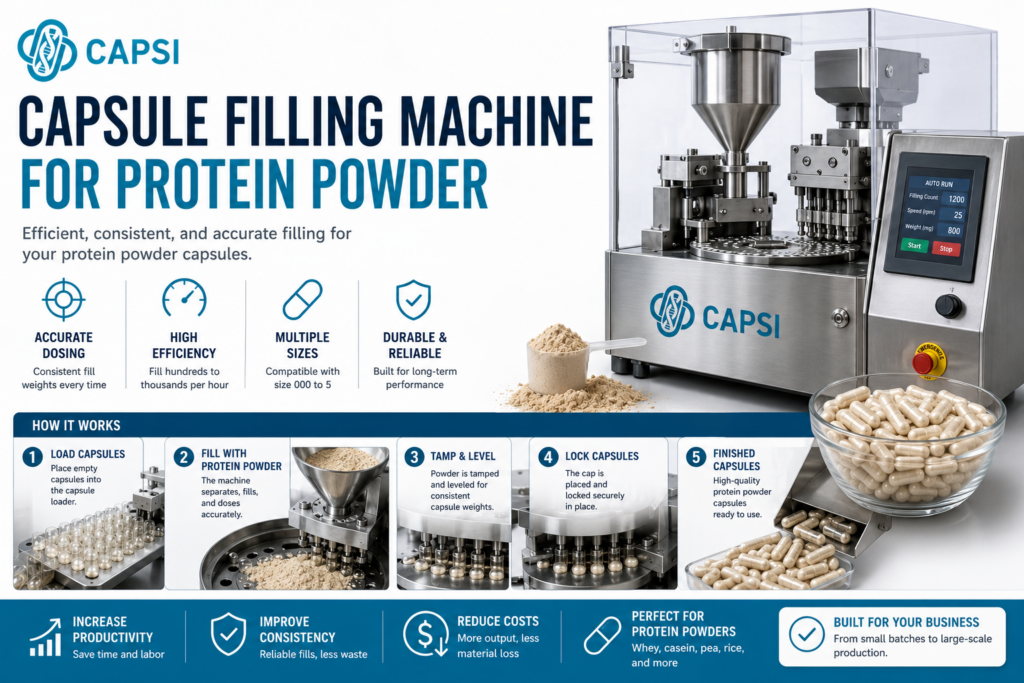
Manual capsule filling often produces lower fill weights than commercial capsule-filling equipment.
Are Size 000 Capsules Large Enough?
For protein powder, Size 000 capsules are usually the most practical option available.
Benefits include:
- Highest capsule capacity
- Fewer capsules per serving
- Faster filling process
- Better suited to bulky powders
If your goal is to encapsulate protein powder, Size 000 capsules are generally the recommended starting point.
Conclusion
Protein powder can be successfully encapsulated, but its bulky nature means a large number of capsules are required compared with traditional protein shakes. For most protein powders, Size 000 capsules offer the best balance between capacity and convenience, typically holding around 900–1,400 mg depending on the specific protein and filling method.
If you are filling whey protein, pea protein, rice protein, or other protein powders into capsules, Size 000 is usually the most efficient capsule size, while Size 00 provides a good alternative for those who prefer slightly smaller capsules.
Frequently Asked Questions About Protein Powder Capsules
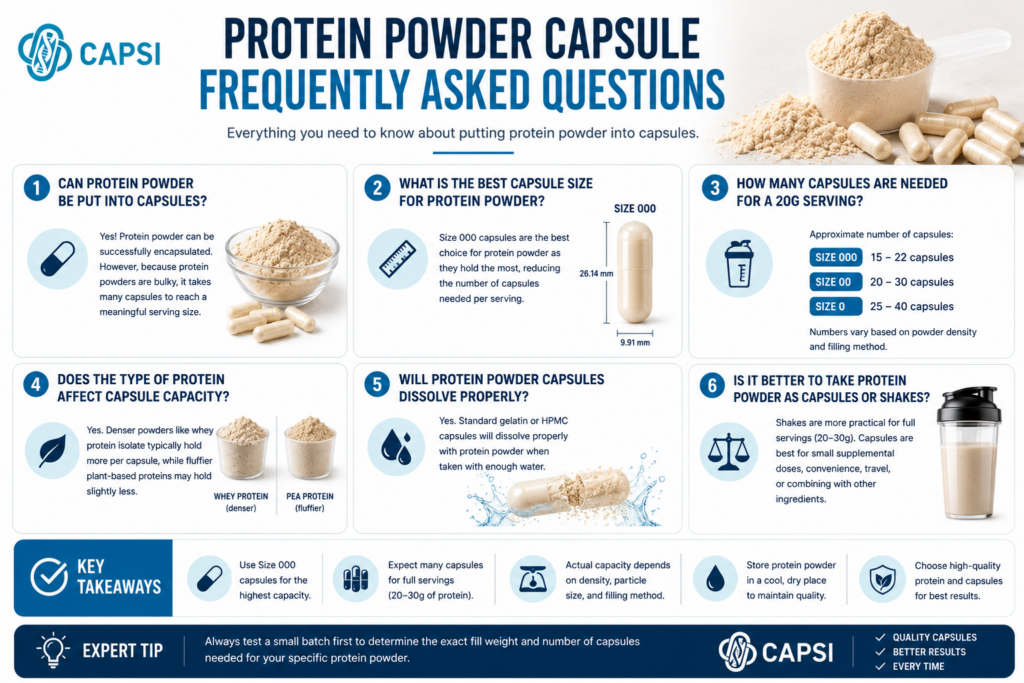
Can protein powder be put into capsules?
Yes, protein powder can be placed into empty capsules. Many people encapsulate protein powder to avoid the taste of shakes, improve portability, or create custom supplement blends. However, because protein powder is bulky, a full serving requires multiple capsules.
What is the best capsule size for protein powder?
Size 000 capsules are generally the best option for protein powder because they offer the highest capacity. Depending on the density of the protein powder, a Size 000 capsule can typically hold between 900 mg and 1,400 mg.
How many protein powder capsules equal one scoop?
A typical scoop of protein powder contains around 20–30 grams of protein powder. Depending on capsule size and powder density, this could require:
- 15–22 Size 000 capsules for 20g
- 22–33 Size 000 capsules for 30g
- More capsules if using Size 00 or smaller sizes
Is protein powder better in capsules or shakes?
For most people, protein shakes are more practical because they allow larger servings to be consumed quickly. Capsules are best suited for smaller supplemental amounts, travel, convenience, or those who dislike the taste of protein shakes.
Does whey protein fit well into capsules?
Yes. Whey protein concentrate and whey protein isolate are usually finely milled powders that encapsulate well. Size 000 capsules are generally recommended to maximize capacity and reduce the number of capsules needed.
Can plant-based protein powders be encapsulated?
Yes. Pea protein, rice protein, hemp protein, soy protein, and pumpkin seed protein can all be filled into capsules. Some plant proteins are less dense than whey protein, which may slightly reduce capsule capacity.
Does protein powder density affect capsule capacity?
Absolutely. Denser protein powders allow more weight to fit into the same capsule volume. Fluffier powders take up more space and result in lower fill weights.
Can I use a capsule-filling machine for protein powder?
Yes. A capsule-filling machine can significantly speed up the process and improve consistency. This is especially useful when filling large quantities of protein powder capsules.
Which capsule material is best for protein powder?
Both gelatin capsules and HPMC (vegetarian) capsules work well with protein powder. The best choice depends on dietary preferences and supplement requirements.
How should protein powder capsules be stored?
Protein powder capsules should be stored in a cool, dry place away from direct sunlight and moisture. Using airtight containers can help maintain freshness and prevent clumping.
Can I combine protein powder with other supplements in the same capsule?
Yes, many people combine protein powder with ingredients such as creatine, amino acids, vitamins, or herbal powders. Always ensure ingredients are compatible and that capsule capacity is sufficient.
Are Size 000 capsules too large to swallow?
Size 000 capsules are the largest commonly available capsule size. While many people can swallow them comfortably, others may prefer Size 00 capsules even though they hold less powder. Choosing the right size depends on personal preference and the amount of protein powder you wish to encapsulate.