
What Capsule Size Is Best for Vitamin D3 Powder?
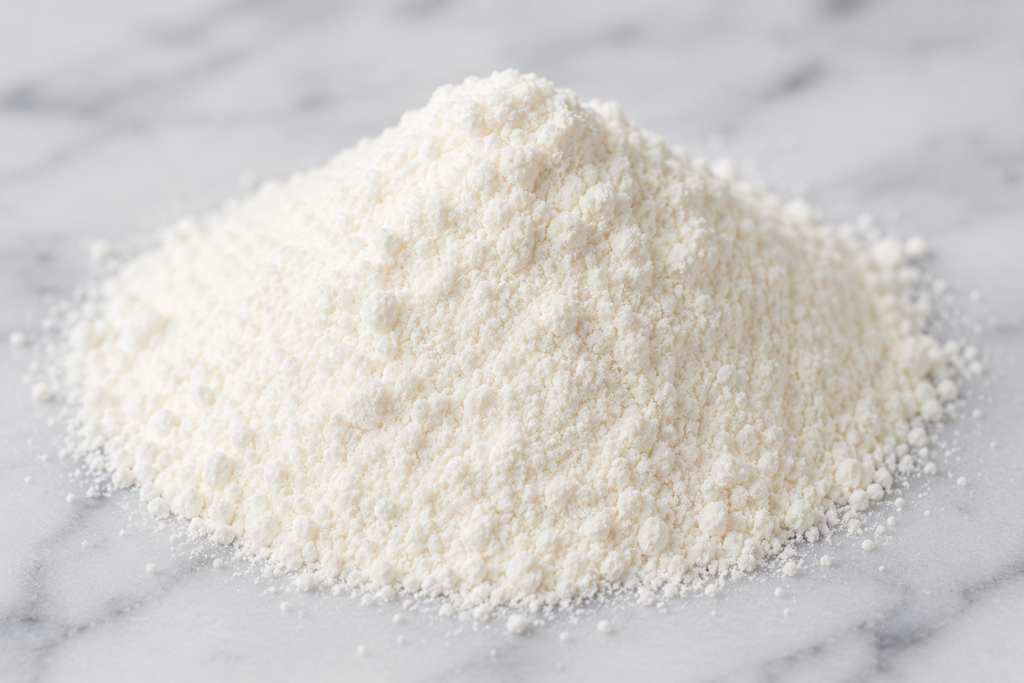
Vitamin D3 (Cholecalciferol) is one of the most widely used nutritional supplements in the world. Unlike many minerals and amino acids that require hundreds of milligrams per serving, Vitamin D3 is typically used in very small quantities measured in micrograms (mcg) or International Units (IU).
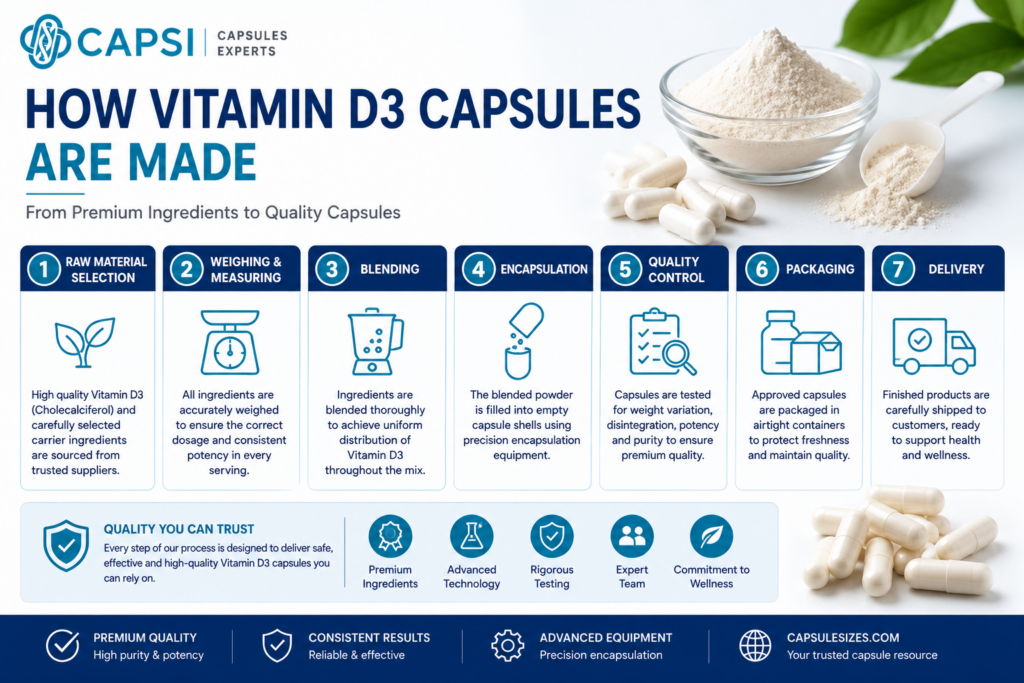
Because the active ingredient occupies very little space, Vitamin D3 is usually blended with carrier ingredients before encapsulation. This means capsule size selection is often determined by the total formulation rather than the Vitamin D3 itself.
For most Vitamin D3 products, Size 3, Size 4, and Size 2 capsules are the most practical choices. Larger capsule sizes are generally only required when Vitamin D3 is combined with additional vitamins, minerals, or botanical ingredients.
Understanding Vitamin D3
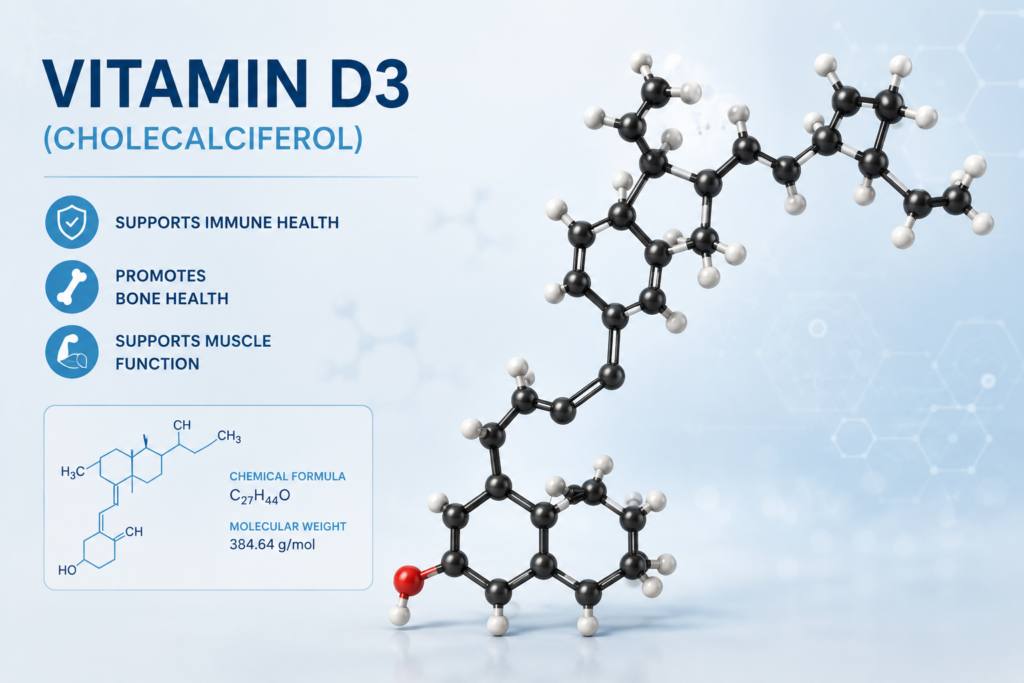
Vitamin D3, also known as Cholecalciferol, is the naturally occurring form of Vitamin D produced by the body when the skin is exposed to sunlight.
It plays an important role in:
- Calcium absorption
- Bone health
- Muscle function
- Immune system support
- General wellbeing
Because modern lifestyles often limit sun exposure, Vitamin D3 supplements have become increasingly popular worldwide.
Vitamin D3 is commonly found in:
- Capsules
- Softgels
- Tablets
- Powders
- Liquid drops
Among these formats, capsules remain popular due to their convenience, ease of swallowing, and ability to contain precise doses.
Vitamin D3 Dosage and Capsule Filling
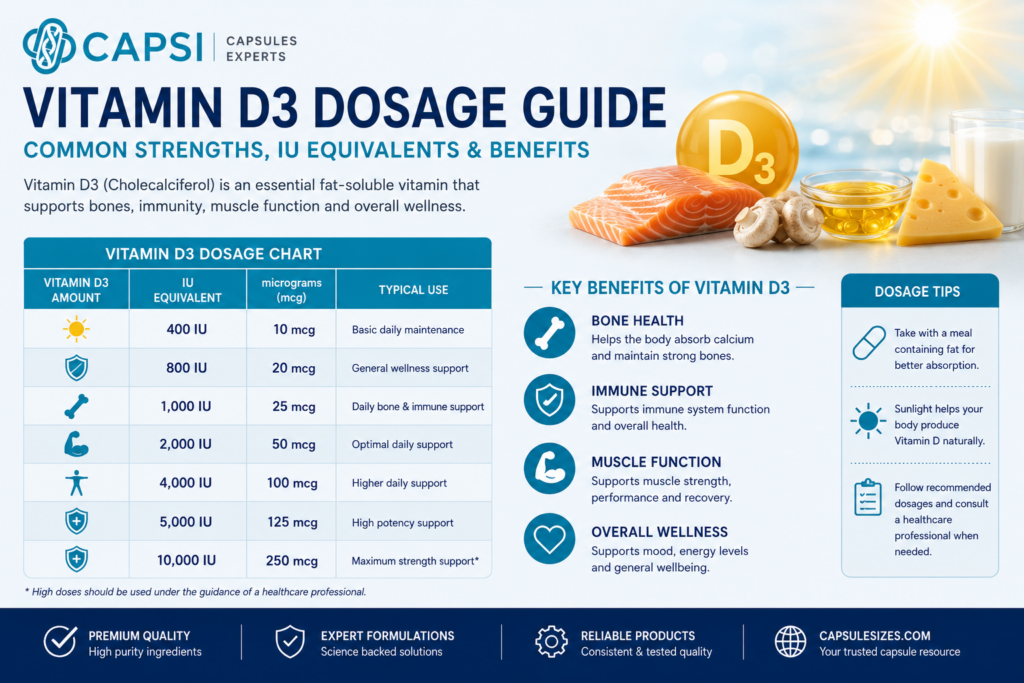
Vitamin D3 is usually measured in International Units (IU).
Common strengths include:
| Vitamin D3 Dose | Micrograms (mcg) |
|---|---|
| 400 IU | 10 mcg |
| 800 IU | 20 mcg |
| 1,000 IU | 25 mcg |
| 2,000 IU | 50 mcg |
| 4,000 IU | 100 mcg |
| 5,000 IU | 125 mcg |
| 10,000 IU | 250 mcg |
Even a 10,000 IU dose occupies only a tiny fraction of a capsule’s capacity.
This is why manufacturers normally add carrier ingredients such as:
- Microcrystalline cellulose
- Rice flour
- Maltodextrin
- Acacia fibre
- Inulin
- Dicalcium phosphate
These carriers improve powder flow and help ensure consistent filling during production.
Vitamin D3 Capsule Size Chart
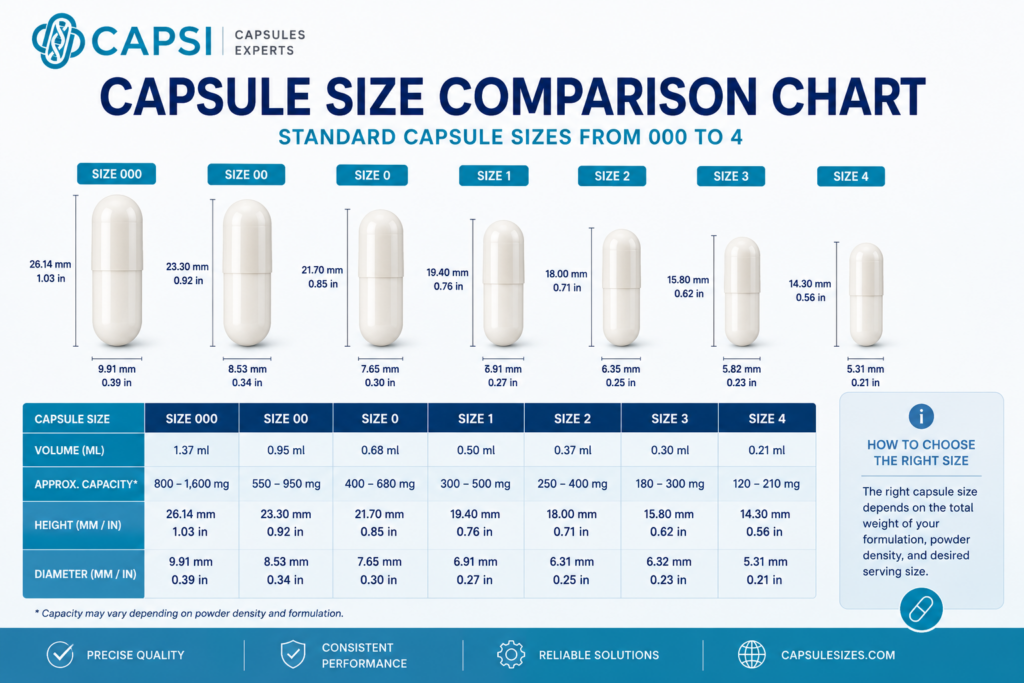
The table below shows the approximate capacity of common capsule sizes.
| Capsule Size | Volume (ml) | Approximate Capacity* |
|---|---|---|
| Size 000 | 1.37 ml | 800–1,600 mg |
| Size 00 | 0.95 ml | 550–950 mg |
| Size 0 | 0.68 ml | 400–680 mg |
| Size 1 | 0.50 ml | 300–500 mg |
| Size 2 | 0.37 ml | 250–400 mg |
| Size 3 | 0.30 ml | 180–300 mg |
| Size 4 | 0.21 ml | 120–210 mg |
*Actual fill weights depend on powder density.
Since Vitamin D3 itself takes up so little space, nearly every capsule size listed above can accommodate typical formulations.
Best Capsule Sizes for Vitamin D3
Size 4 Capsules
Size 4 capsules are among the smallest commonly used capsules.
Advantages
- Easy to swallow
- Ideal for low-dose supplements
- Professional appearance
- Suitable for daily wellness products
Because Vitamin D3 requires very little room, Size 4 capsules can comfortably contain most standalone Vitamin D3 formulations.
Typical Uses
- 1,000 IU Vitamin D3
- 2,000 IU Vitamin D3
- 4,000 IU Vitamin D3
- Daily maintenance formulas
Size 3 Capsules
Size 3 capsules are often considered the ideal balance between capacity and convenience.
Advantages
- Easy swallowing
- More room for carriers
- Suitable for automated filling equipment
- Common supplement industry choice
For many manufacturers, Size 3 capsules represent the most versatile option for Vitamin D3 products.
Typical Uses
- Vitamin D3 with carrier powders
- Vitamin D3 and K2 blends
- General wellness supplements
Size 2 Capsules
Size 2 capsules provide additional filling space for combination products.
Advantages
- Allows larger formulations
- Ideal for multiple active ingredients
- Supports complex blends
Typical Uses
- Vitamin D3 + Vitamin K2
- Vitamin D3 + Magnesium
- Bone support formulas
- Immune support complexes
Size 1 Capsules
Size 1 capsules are suitable when Vitamin D3 forms part of a larger nutritional blend.
These capsules are commonly used for:
- Multivitamin products
- Mineral complexes
- Advanced wellness formulations
Size 0 Capsules
Size 0 capsules are rarely needed for Vitamin D3 alone but are frequently selected for combination supplements.
Common examples include:
- Vitamin D3 + K2 + Magnesium
- Complete bone health formulas
- Multi-nutrient capsules
Size 00 Capsules
Size 00 capsules are one of the most popular capsule sizes overall.
While excessive for pure Vitamin D3 powder, they are useful when Vitamin D3 is incorporated into large formulations containing multiple active ingredients.
Vitamin D3 and Vitamin K2 Capsules
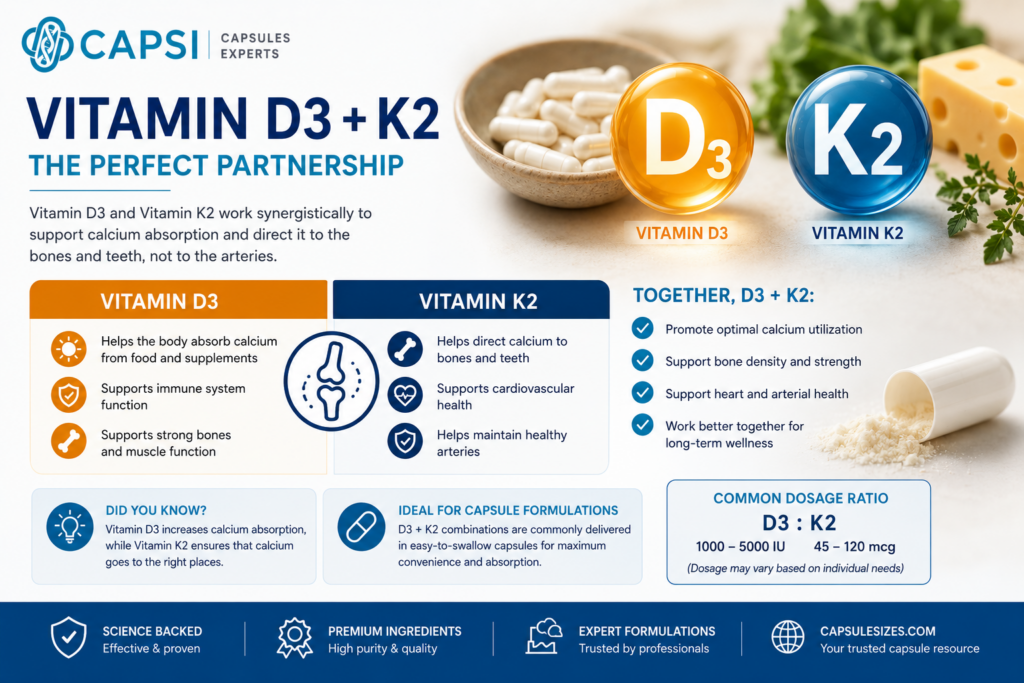
One of the fastest-growing supplement categories combines Vitamin D3 with Vitamin K2.
The nutrients are often paired because:
- Vitamin D3 supports calcium absorption.
- Vitamin K2 helps direct calcium to bones and teeth.
Vitamin D3 and K2 combinations generally require more capsule space than Vitamin D3 alone, making Size 2, Size 1, or Size 0 capsules popular choices.
Vitamin D3 Powder Density
The density of Vitamin D3 formulations varies significantly depending on:
- Carrier selection
- Granulation process
- Moisture content
- Flow agents used
- Active ingredient concentration
Two Vitamin D3 powders containing identical amounts of active ingredient may require different capsule sizes due to differences in density.
This is why testing actual fill weights remains important when developing formulations.
Gelatin vs HPMC Capsules for Vitamin D3
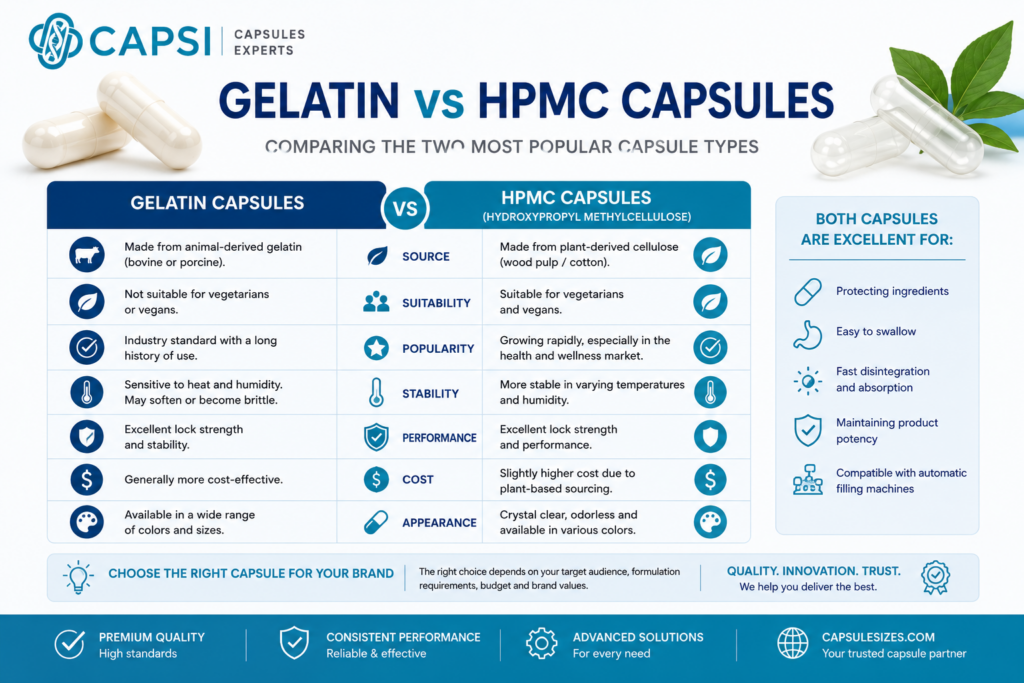
Vitamin D3 can be encapsulated in either gelatin or HPMC capsules.
| Feature | Gelatin Capsules | HPMC Capsules |
|---|---|---|
| Animal-derived | Yes | No |
| Vegetarian | No | Yes |
| Vegan | No | Yes |
| Suitable for Vitamin D3 | Yes | Yes |
| Widely Available | Yes | Yes |
Gelatin Capsules
Gelatin capsules are:
- Cost-effective
- Easy to fill
- Widely used globally
- Available in all standard sizes
HPMC Capsules
HPMC capsules are:
- Plant-based
- Vegetarian friendly
- Vegan friendly
- Popular for premium supplement brands
Both options work equally well for Vitamin D3 formulations.
Encapsulating Vitamin D3 Powder
Vitamin D3 powder can be filled using:
Manual Capsule Fillers
Ideal for:
- Home users
- Small-scale production
- Product testing
Semi-Automatic Equipment
Suitable for:
- Growing supplement brands
- Medium production runs
Fully Automatic Encapsulation Machines
Best for:
- Large manufacturers
- Commercial production
- High-volume filling operations
Because Vitamin D3 dosages are small, proper blending is essential to ensure uniform distribution throughout the batch.
Common Challenges When Filling Vitamin D3 Capsules
Low Fill Volume
Vitamin D3 occupies very little space.
Solution:
- Use suitable carrier ingredients.
- Blend thoroughly before filling.
Poor Powder Flow
Some Vitamin D3 formulations may not flow efficiently through filling equipment.
Solution:
- Add approved flow agents.
- Improve granulation.
Uneven Distribution
Low-dose ingredients can separate if mixed incorrectly.
Solution:
- Use geometric dilution techniques.
- Validate mixing procedures.
Who Uses Vitamin D3 Capsules?
Vitamin D3 capsules are commonly produced by:
- Supplement manufacturers
- Contract packers
- Private label brands
- Nutraceutical companies
- Wellness businesses
- Health food retailers
The ingredient remains one of the most popular supplements worldwide due to its broad consumer appeal.
Frequently Asked Questions
What is the best capsule size for Vitamin D3?
For most standalone Vitamin D3 formulations, Size 3 and Size 4 capsules are typically the best options.
Can Vitamin D3 fit inside a Size 4 capsule?
Yes. Most Vitamin D3 products fit comfortably inside a Size 4 capsule.
Is Size 00 too large for Vitamin D3?
For Vitamin D3 alone, usually yes. However, Size 00 capsules are useful for larger multi-ingredient formulations.
Can Vitamin D3 be combined with other supplements?
Yes. It is frequently combined with Vitamin K2, Magnesium, Calcium, Zinc, and Multivitamin blends.
Are HPMC capsules suitable for Vitamin D3?
Yes. HPMC capsules are commonly used for vegetarian and vegan Vitamin D3 supplements.
Does Vitamin D3 require carrier ingredients?
In most formulations, yes. The active dose is so small that carrier ingredients are typically used to improve filling consistency.
Conclusion
Vitamin D3 is one of the easiest ingredients to encapsulate because the required dosage occupies very little space. For standalone formulations, Size 3 and Size 4 capsules are usually the most practical choices, offering an excellent balance between capacity and ease of swallowing. When Vitamin D3 is combined with Vitamin K2, magnesium, calcium, or other nutrients, larger sizes such as Size 2, Size 1, or Size 0 may be more appropriate.
As with any supplement formulation, the ideal capsule size depends on the total blend weight, powder density, and desired serving size. Testing actual fill weights is always recommended before final production.