
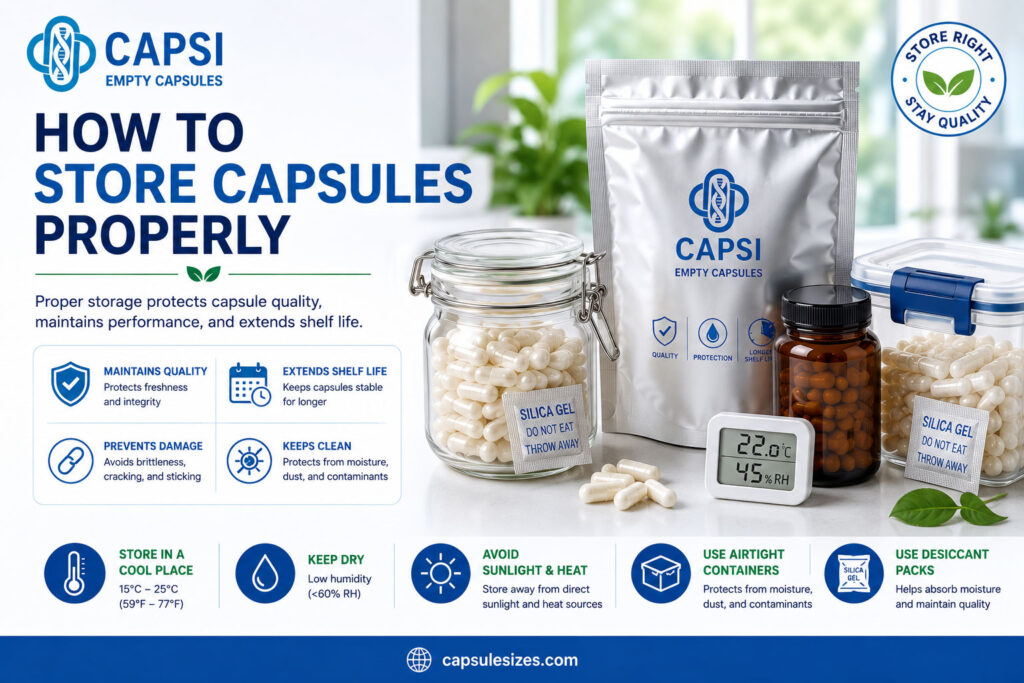
Proper capsule storage is important for maintaining:
- capsule quality
- performance
- appearance
- shelf life
Whether you use gelatin capsules or HPMC capsules, storing them correctly helps prevent problems such as:
- brittleness
- softening
- cracking
- deformation
- moisture damage
Empty capsules should always be stored in suitable environmental conditions to help maintain their integrity and usability.
Why Proper Capsule Storage Matters
Capsules are sensitive to environmental conditions such as:
- temperature
- humidity
- moisture
- sunlight
- air exposure
Poor storage conditions can affect:
- capsule texture
- flexibility
- dissolution performance
- filling performance
Proper storage helps ensure capsules remain:
- smooth
- stable
- easy to fill
- easy to swallow
Ideal Temperature for Storing Capsules
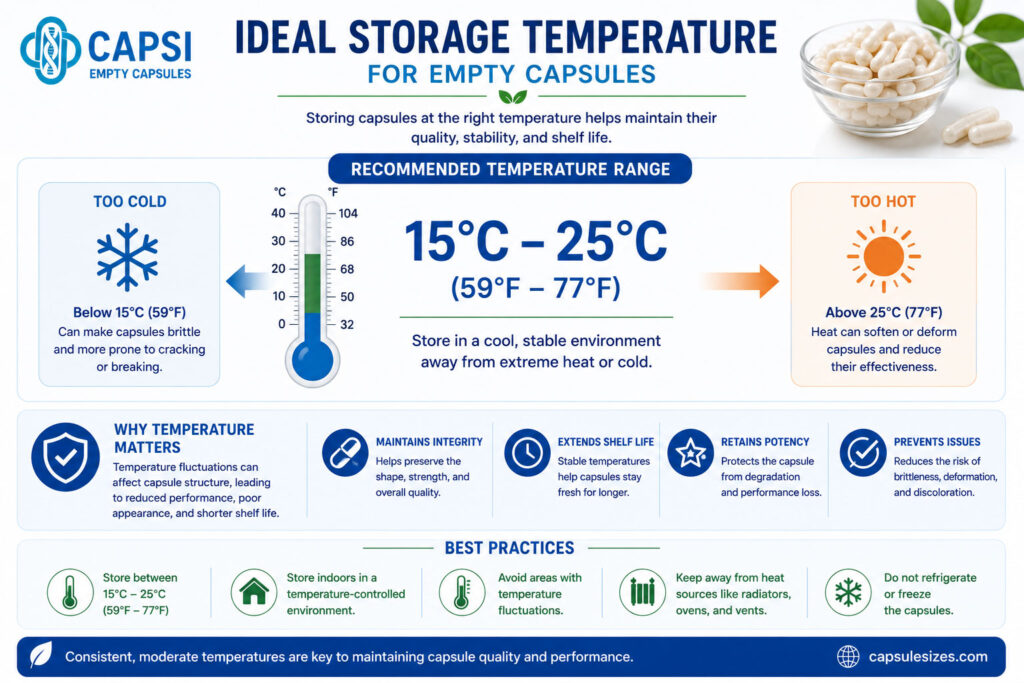
Capsules should generally be stored in a cool, dry environment.
Recommended storage temperatures are commonly around:
15∘C to 25∘C
Avoid exposing capsules to:
- excessive heat
- direct sunlight
- freezing temperatures
High temperatures may cause capsules to:
- soften
- stick together
- deform
Very cold temperatures may increase brittleness in some capsule types.
Avoid Moisture & Humidity
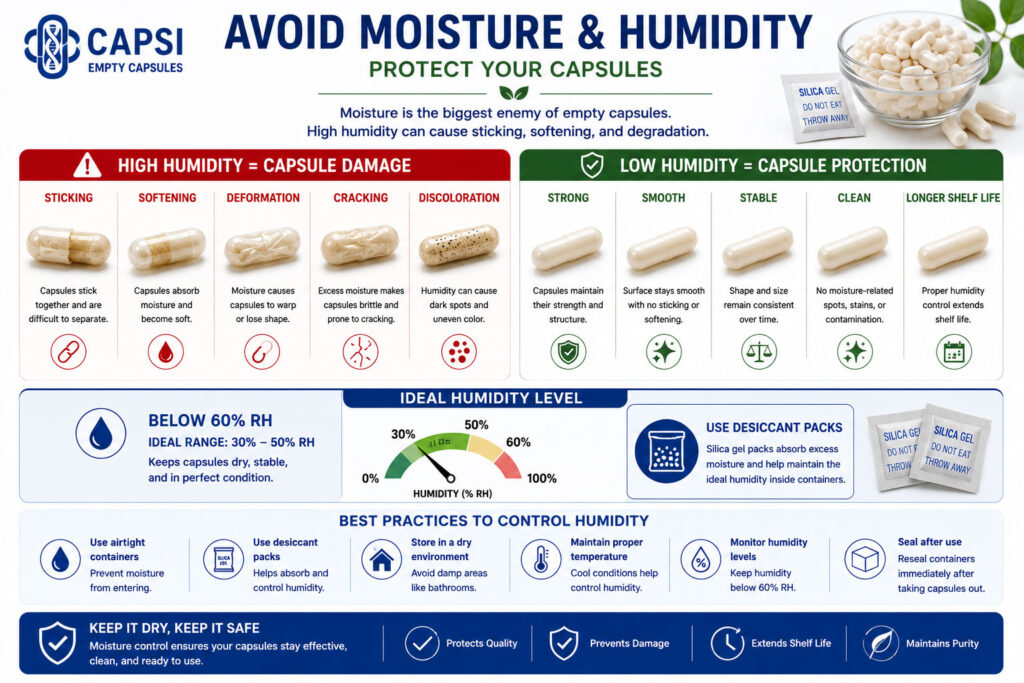
Moisture is one of the most important factors in capsule storage.
Excess humidity may cause capsules to:
- soften
- swell
- become sticky
- lose shape
Very low humidity may cause capsules to:
- crack
- become brittle
- split during filling
Capsules should ideally be stored in controlled humidity conditions.
Using:
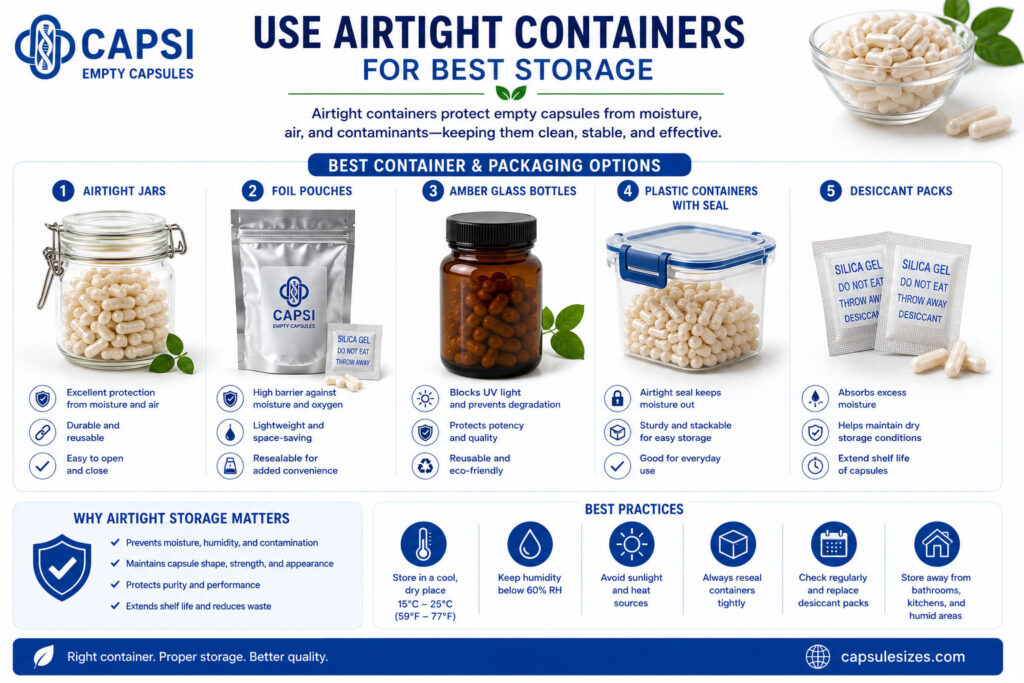
- airtight containers
- sealed packaging
- desiccant packs
may help protect capsules from moisture exposure.
Keep Capsules Away From Sunlight
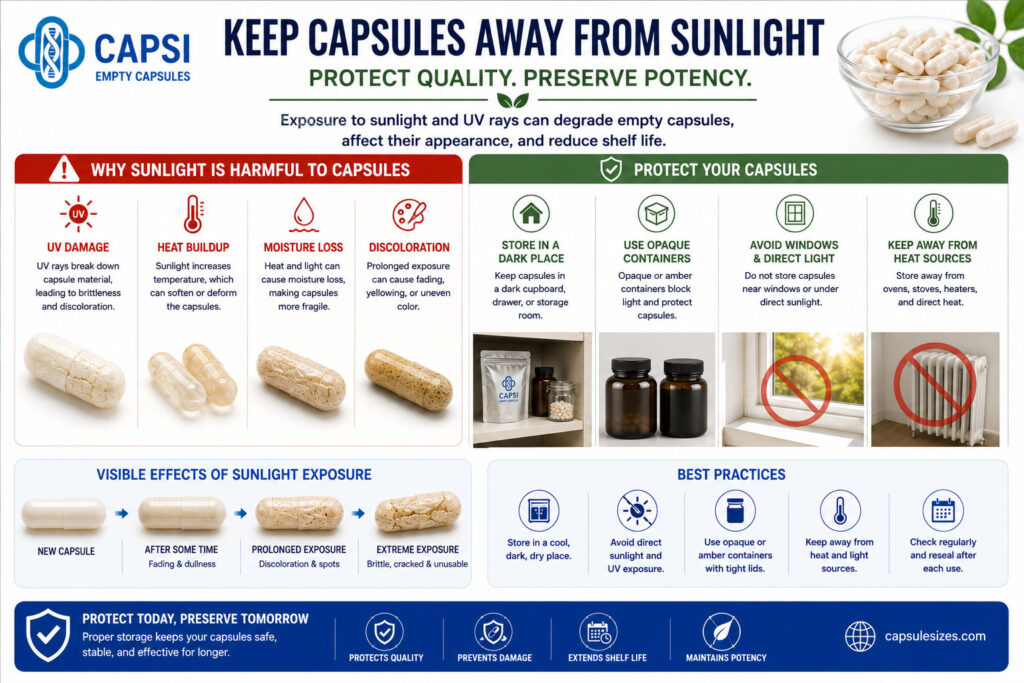
Direct sunlight and UV exposure may affect capsule quality over time.
Capsules should be stored:
- away from windows
- away from direct sunlight
- in shaded or enclosed storage areas
Opaque containers or original packaging can help reduce light exposure.
Use Airtight Containers
Airtight storage containers help protect capsules from:
- moisture
- dust
- contaminants
- odors
Many capsule suppliers use:
- sealed bags
- foil pouches
- moisture-barrier packaging
to help preserve capsule quality during storage.
After opening, capsules should be resealed properly whenever possible.
How Long Do Empty Capsules Last?
Shelf life depends on:
- capsule material
- storage conditions
- packaging quality
- humidity control
When stored correctly, many empty capsules may remain usable for several years.
Always check:
- manufacturer guidance
- batch information
- expiry dates
before use.
Storing Gelatin Capsules
Gelatin capsules are more sensitive to moisture fluctuations.
Excess humidity may cause gelatin capsules to:
- soften
- stick together
Very dry conditions may cause them to:
- crack
- become brittle
Gelatin capsules should ideally be stored in stable environmental conditions.
Storing HPMC Capsules
HPMC capsules generally have lower moisture content than gelatin capsules.
They are often considered:
- more stable in varying humidity conditions
- suitable for moisture-sensitive ingredients
However, they should still be protected from:
- excessive humidity
- direct heat
- contamination
Signs Capsules Have Been Stored Incorrectly
Capsules that have been poorly stored may show signs such as:
- cracking
- brittleness
- deformation
- sticking together
- unusual odor
- discoloration
- softened shells
Damaged capsules should not be used for important formulations.
Should Capsules Be Refrigerated?
Refrigeration is not usually necessary for empty capsules.
Frequent temperature changes may introduce:
- condensation
- moisture exposure
Most capsules are best stored at stable room temperature in dry conditions.
Best Storage Practices
For best results:
- keep capsules sealed when not in use
- avoid humid environments
- store away from sunlight
- use clean, dry handling equipment
- keep capsules in original packaging where possible
Proper storage helps maintain:
- capsule appearance
- filling performance
- overall quality
Gelatin vs HPMC Storage Comparison
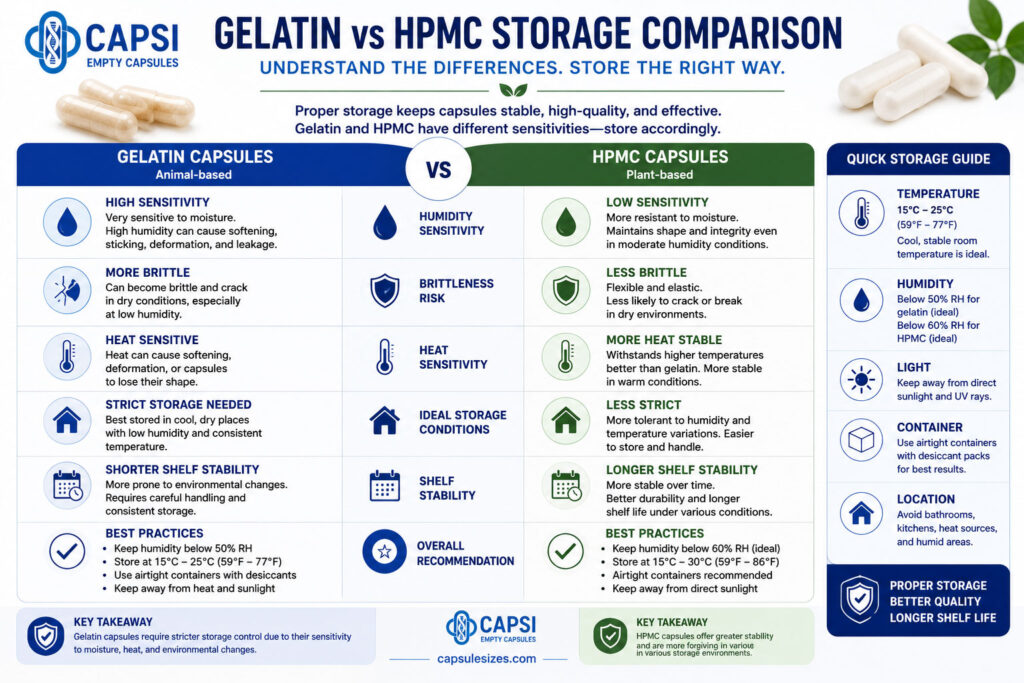
| Feature | Gelatin Capsules | HPMC Capsules |
|---|---|---|
| Moisture Sensitivity | Higher | Lower |
| Brittleness Risk | Higher in dry conditions | Lower |
| Heat Sensitivity | Moderate | Moderate |
| Humidity Stability | More sensitive | More stable |
| Storage Recommendation | Controlled humidity | Cool, dry storage |
Frequently Asked Questions
What temperature should capsules be stored at?
Capsules are commonly stored around 15°C to 25°C in cool, dry conditions.
Can capsules go bad?
Poor storage conditions may damage capsules over time.
Should capsules be refrigerated?
Usually no. Stable room temperature storage is generally preferred.
Can moisture damage capsules?
Yes. Excess moisture may soften or deform capsules.
Can capsules crack?
Yes. Very dry conditions may cause brittleness and cracking.
How should empty capsules be stored?
Store capsules in sealed containers away from heat, sunlight, and humidity.
Are HPMC capsules easier to store than gelatin capsules?
HPMC capsules are often considered more stable in varying humidity conditions.