
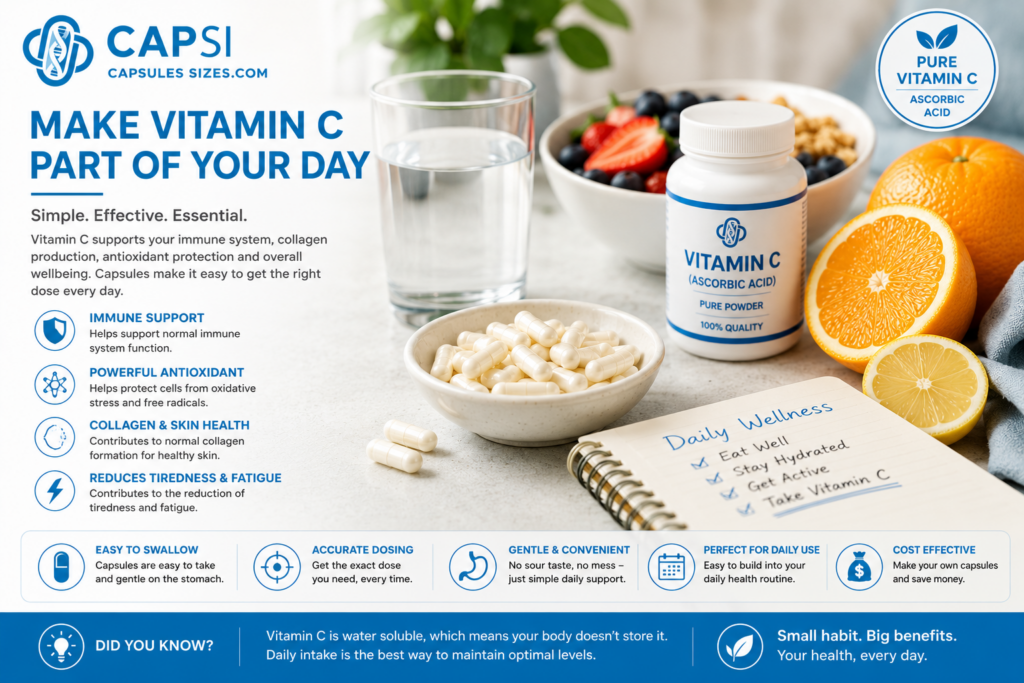
Vitamin C (ascorbic acid) is one of the world’s most widely used dietary supplements. It is commonly taken to support normal immune function, collagen formation, antioxidant protection, and overall health. While many people purchase ready-made Vitamin C capsules, others prefer to buy Vitamin C powder and fill their own capsules at home or for small-scale supplement production.
One of the most common questions is:
What size capsule do I need for Vitamin C powder?
The answer depends on the desired dosage, the density of the Vitamin C powder, and the type of capsule being used. This guide explains how much Vitamin C fits into each capsule size and helps you choose the most suitable option.
What Is Vitamin C?
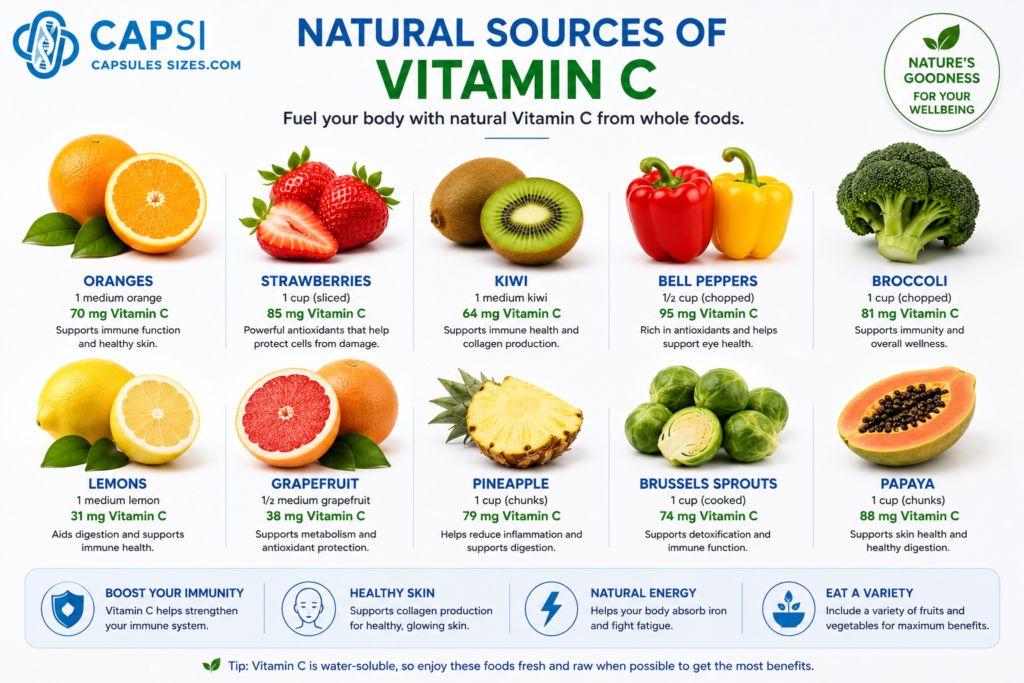
Vitamin C, also known as ascorbic acid, is a water-soluble vitamin naturally found in fruits and vegetables such as oranges, strawberries, kiwis, bell peppers, and broccoli.
Vitamin C contributes to:
- Normal immune system function
- Normal collagen formation
- Healthy skin, bones, cartilage, and blood vessels
- Protection of cells from oxidative stress
- Increased iron absorption
- Reduction of tiredness and fatigue
Because Vitamin C is water-soluble and not stored in large quantities within the body, many people supplement daily.
Why Use Capsules Instead of Tablets?
Many supplement users choose capsules when taking Vitamin C powder because they:
- Avoid the strong sour taste of ascorbic acid
- Allow accurate dosing
- Are easy to swallow
- Can be made at home
- Avoid unnecessary fillers and binders
- Allow customised serving sizes
Capsules are particularly popular among people purchasing bulk Vitamin C powder.
How Dense Is Vitamin C Powder?
Vitamin C powder is generally considered a medium-density powder.
The exact density varies between manufacturers, but ascorbic acid usually packs efficiently compared to many herbal powders.
This means that relatively large doses can fit into standard capsule sizes.
Typical packed density allows:
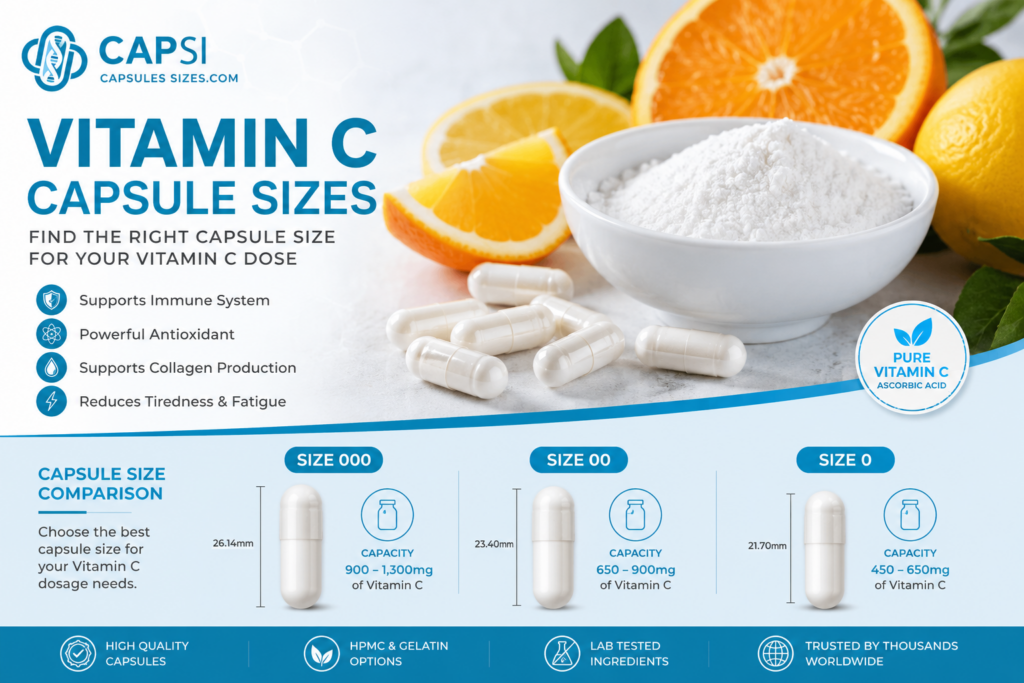
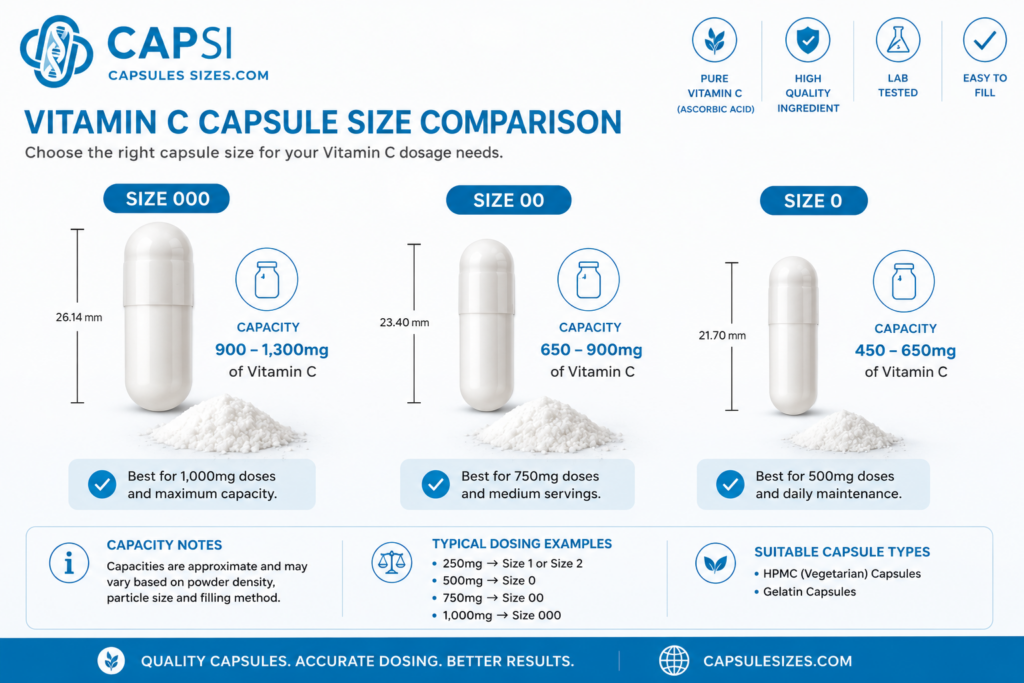
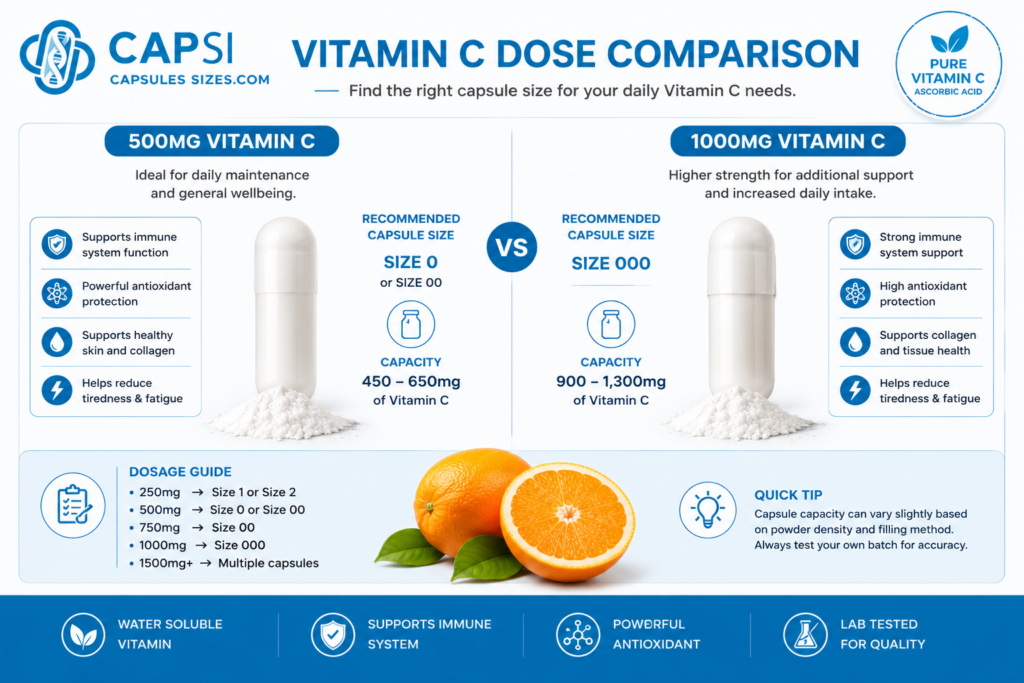
- Size 0 capsules to hold approximately 500–650mg
- Size 00 capsules to hold approximately 700–900mg
- Size 000 capsules to hold approximately 1,000–1,300mg
Actual results vary depending on:
- Powder particle size
- Moisture content
- Capsule filling method
- Compression during filling
Vitamin C Capsule Size Chart
| Capsule Size | Approximate Vitamin C Capacity |
|---|---|
| Size 4 | 120–180mg |
| Size 3 | 180–250mg |
| Size 2 | 250–350mg |
| Size 1 | 350–450mg |
| Size 0 | 450–650mg |
| Size 00 | 650–900mg |
| Size 000 | 900–1,300mg |
These values are estimates and may vary slightly depending on the specific Vitamin C powder used.
Best Capsule Size for 250mg Vitamin C
A 250mg dose is commonly used in multivitamin formulations.
Recommended capsule sizes:
- Size 2
- Size 1
A Size 1 capsule is often preferred because it provides additional space for flow variations during filling.
Best Capsule Size for 500mg Vitamin C
A 500mg serving is one of the most popular Vitamin C dosages available.
Recommended capsule sizes:
- Size 0
- Size 00
Many users find Size 0 capsules provide the ideal balance between capacity and ease of swallowing.
Best Capsule Size for 1000mg Vitamin C
A 1,000mg (1g) serving is commonly taken during periods of increased Vitamin C supplementation.
Recommended capsule size:
- Size 000
In many cases a single Size 000 capsule can hold approximately 1,000mg of Vitamin C powder.
However, depending on the powder density, some users may choose:
- Two Size 00 capsules
- One Size 000 capsule
Best Capsule Size for High-Dose Vitamin C
Some individuals consume:
- 1,500mg
- 2,000mg
- 3,000mg
or more per day.
These larger quantities typically require multiple capsules.
Example:
| Daily Dose | Approximate Requirement |
|---|---|
| 1,500mg | 2 Size 00 capsules |
| 2,000mg | 2 Size 000 capsules |
| 3,000mg | 3 Size 000 capsules |
HPMC vs Gelatin Capsules for Vitamin C
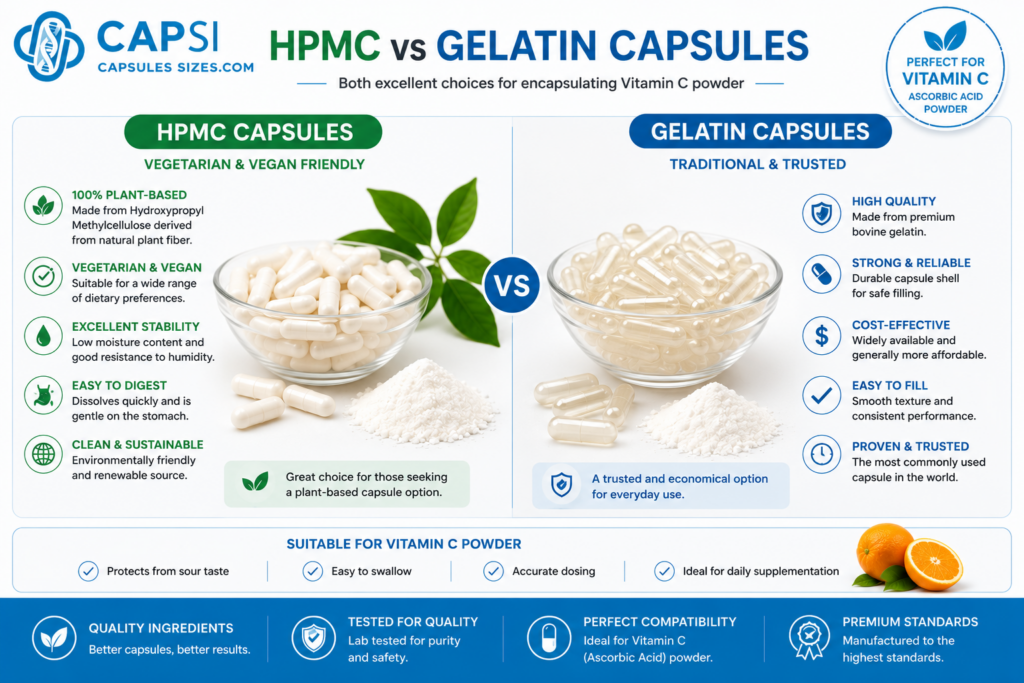
Vitamin C can be encapsulated using either gelatin or HPMC capsules.
HPMC Capsules
Advantages:
- Vegetarian friendly
- Vegan friendly
- Plant-based material
- Suitable for a wider range of dietary requirements
- Good moisture stability
Gelatin Capsules
Advantages:
- Cost-effective
- Widely available
- Easy to fill
- Strong capsule shell
Both options work very well with Vitamin C powder.
Is Vitamin C Powder Acidic?
Yes.
Ascorbic acid naturally has a low pH and a distinctly sour taste.
This is one reason why many people prefer capsules instead of mixing powder into drinks.
Capsules help avoid:
- Sour taste
- Dental exposure
- Powder handling mess
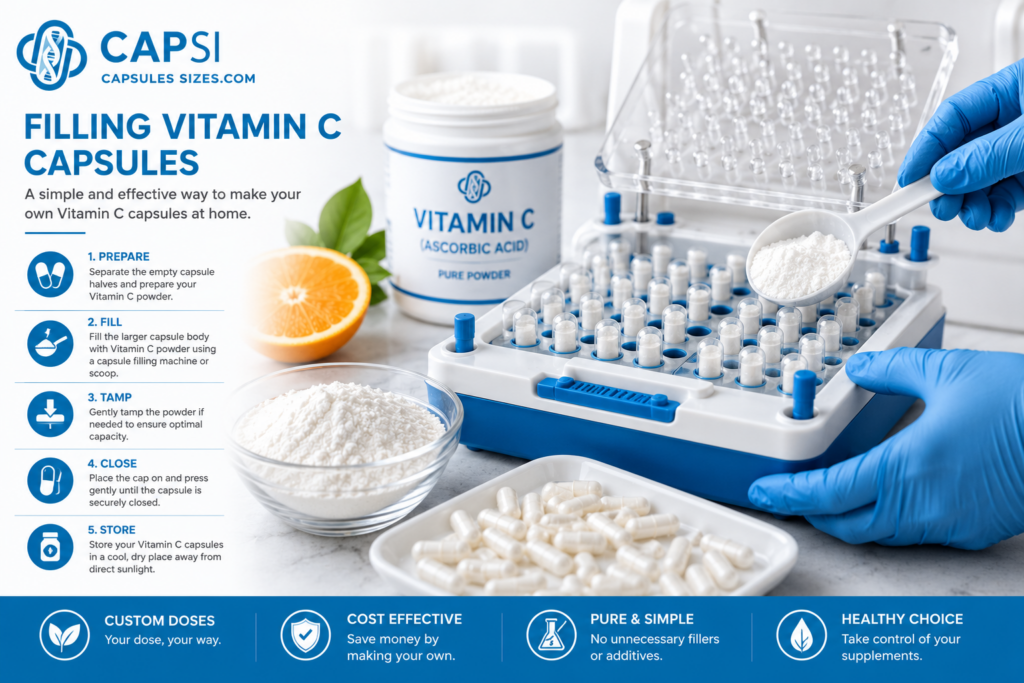
Filling Your Own Vitamin C Capsules
If you plan to encapsulate Vitamin C powder yourself, you will need:
- Empty capsules
- Vitamin C powder
- Capsule filling machine (optional)
- Precision scale
The process is simple:
- Separate the capsule halves.
- Fill the larger capsule body with Vitamin C powder.
- Gently tamp the powder if required.
- Attach the capsule cap.
- Store capsules in a cool, dry location.
A capsule machine can significantly speed up production when making larger quantities.
How Many Vitamin C Capsules Can Be Made From 1kg of Powder?
The number of capsules depends on the dose.
At 500mg per capsule
1kg = 1,000,000mg
1,000,000 ÷ 500 = 2,000 capsules
At 1,000mg per capsule
1,000,000 ÷ 1,000 = 1,000 capsules
This makes bulk Vitamin C powder a cost-effective option for long-term supplementation.
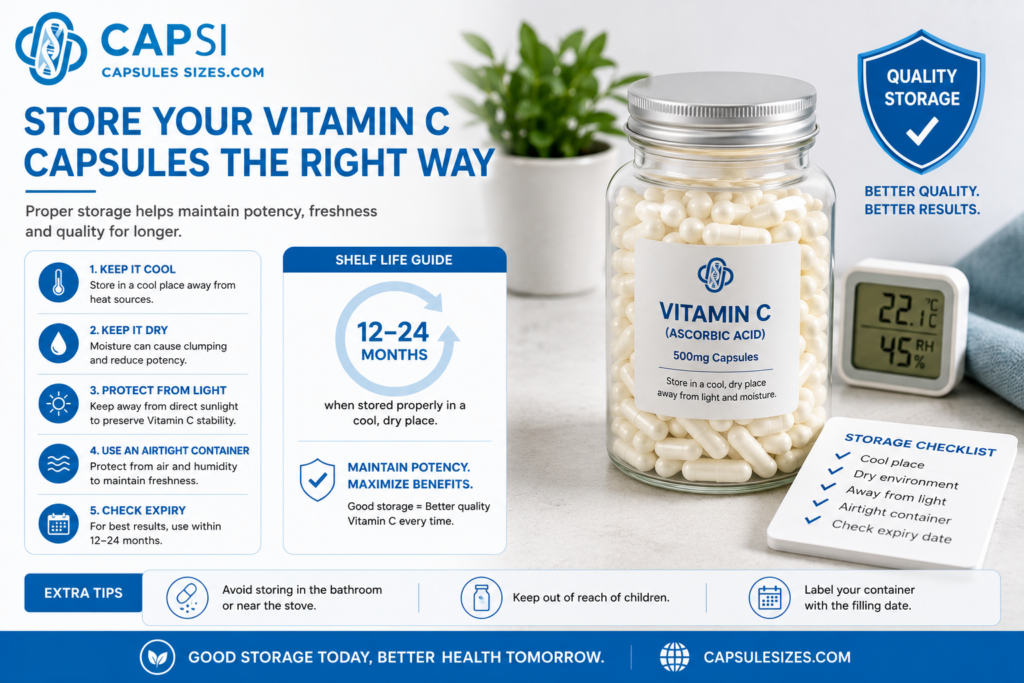
Storage Recommendations
Vitamin C powder should be stored:
- In a cool, dry environment
- Away from direct sunlight
- In airtight containers
- Away from excessive humidity
Proper storage helps maintain product quality and minimise degradation over time.
Which Capsule Size Is Best for Vitamin C?
For most applications:
| Target Dose | Recommended Capsule |
|---|---|
| 250mg | Size 2 or Size 1 |
| 500mg | Size 0 |
| 750mg | Size 00 |
| 1,000mg | Size 000 |
| Maximum capacity | Size 000 |
If your goal is to fit the highest possible amount of Vitamin C into a single capsule, Size 000 capsules are generally the best choice.
Frequently Asked Questions
Can 1 gram of Vitamin C fit in a capsule?
Yes. A Size 000 capsule can often hold approximately 1,000mg of Vitamin C powder, depending on powder density and filling technique.
What is the best capsule size for 500mg Vitamin C?
Size 0 capsules are usually ideal for 500mg doses.
Can Vitamin C be put into vegan capsules?
Yes. Vitamin C works very well in HPMC vegetarian capsules.
Does Vitamin C damage capsules?
No. Vitamin C is routinely encapsulated by supplement manufacturers worldwide.
Which capsule size holds the most Vitamin C?
Size 000 capsules provide the largest standard capsule capacity.
Conclusion
Vitamin C is one of the easiest supplement powders to encapsulate due to its relatively high density and excellent flow characteristics. For smaller daily doses, Size 0 and Size 00 capsules are usually sufficient, while Size 000 capsules are the preferred choice for 1,000mg servings. Whether you choose gelatin or vegetarian HPMC capsules, selecting the correct capsule size ensures accurate dosing, easier filling, and a better overall supplement experience.
For most users making their own Vitamin C capsules, Size 0 capsules work well for 500mg servings, while Size 000 capsules are the best option for 1,000mg doses and maximum fill capacity.