
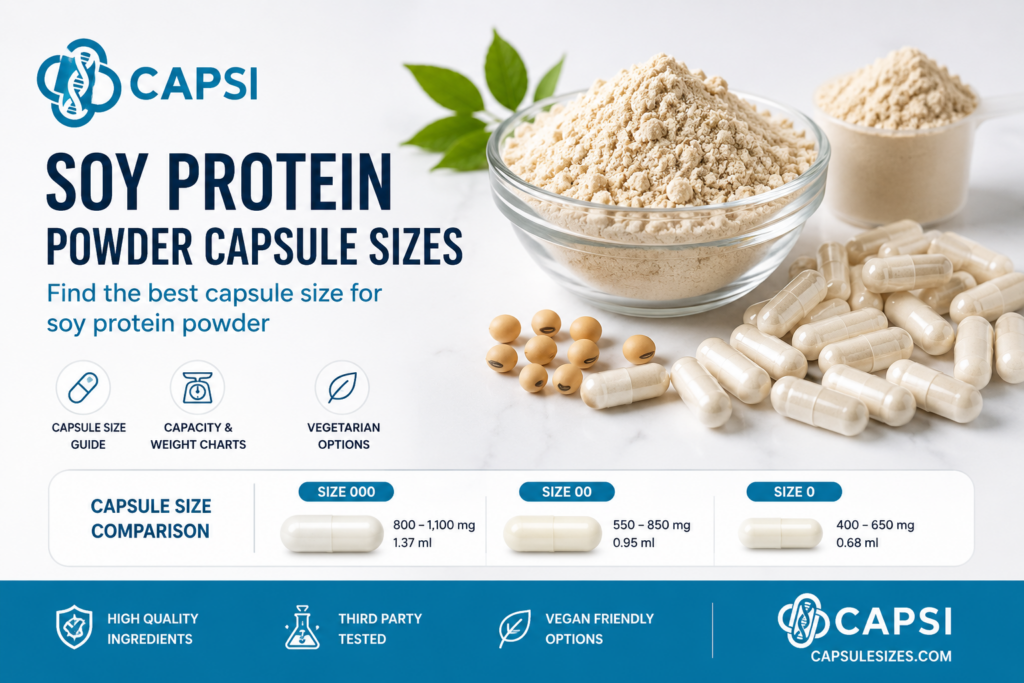
Soy protein powder is one of the most widely used plant-based protein supplements in the world. Whether you’re a vegan athlete, vegetarian, fitness enthusiast, or simply looking to increase your daily protein intake, soy protein offers a complete amino acid profile that makes it a popular alternative to animal-derived proteins.
If you want to encapsulate soy protein powder into empty capsules, choosing the right capsule size is essential. Protein powders are generally bulkier than vitamins or herbal extracts, meaning they require larger capsules to deliver useful amounts per serving.
This guide explains the best capsule sizes for soy protein powder, how much fits into each capsule, and how many capsules you may need to reach your protein goals.
What Is Soy Protein Powder?
Soy protein powder is derived from soybeans and processed to concentrate or isolate the protein content. It is commonly available in two forms:
- Soy Protein Concentrate
- Soy Protein Isolate
Soy protein isolate generally contains a higher protein percentage and fewer carbohydrates and fats. Because of its finer particle size and lower moisture content, it may pack slightly more efficiently into capsules than soy protein concentrate.
Soy protein is considered a complete protein because it contains all nine essential amino acids required by the human body.
Why Put Soy Protein Powder Into Capsules?
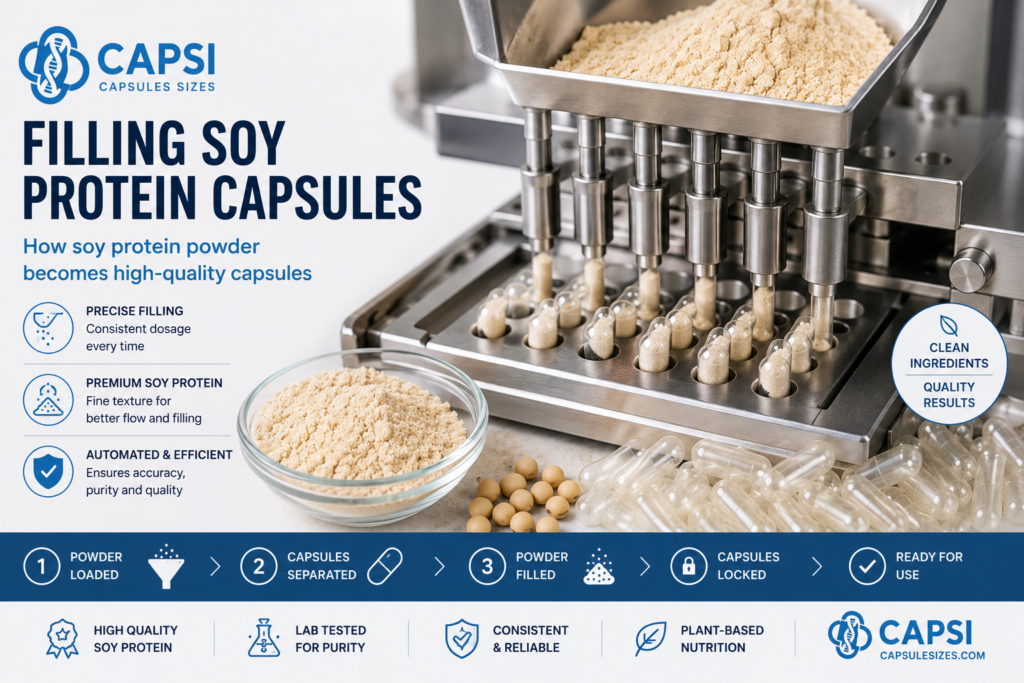
While many people consume soy protein as shakes or smoothies, capsules offer several advantages:
- Convenient for travel
- No mixing required
- Easy portion control
- Tasteless consumption
- Ideal for supplement formulations
- Useful for custom blends
Capsules are especially useful for people who dislike the taste of soy protein or wish to combine it with other powdered ingredients.
Best Capsule Size for Soy Protein Powder
For most applications, size 000 capsules are the best choice for soy protein powder.
Size 000 is the largest standard capsule size commonly available and provides the greatest capacity, reducing the total number of capsules needed.
Soy Protein Capsule Size Chart
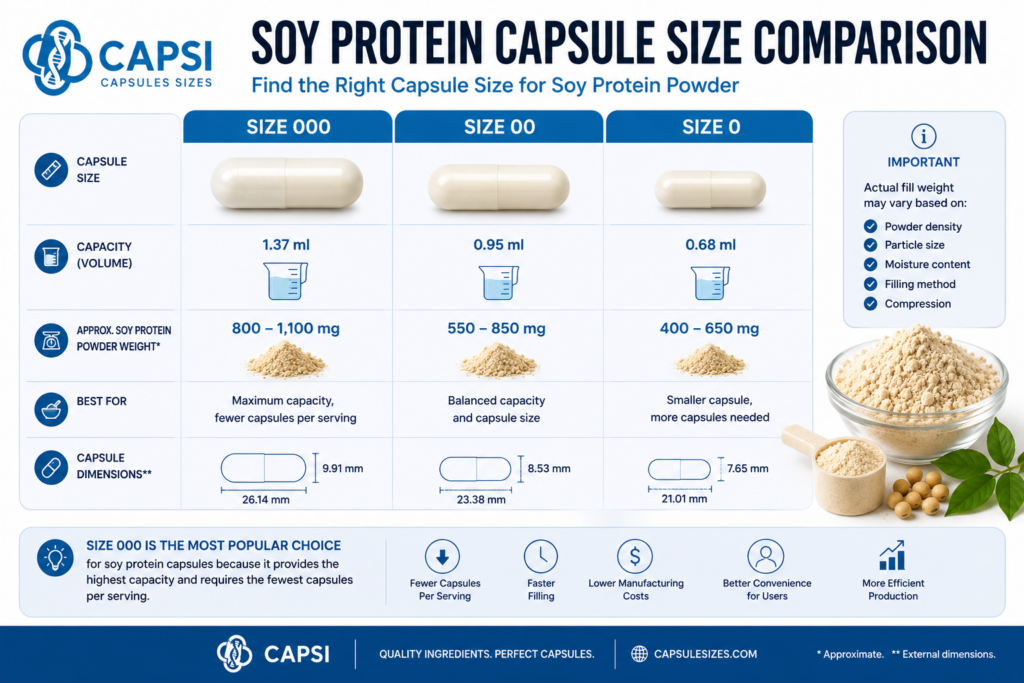
| Capsule Size | Volume Capacity | Approximate Soy Protein Weight |
|---|---|---|
| Size 000 | 1.37 ml | 800–1,100 mg |
| Size 00 | 0.95 ml | 550–850 mg |
| Size 0 | 0.68 ml | 400–650 mg |
| Size 1 | 0.50 ml | 300–500 mg |
| Size 2 | 0.37 ml | 200–350 mg |
Actual fill weights vary depending on:
- Powder density
- Particle size
- Moisture content
- Compression during filling
- Manufacturing process
Why Size 000 Capsules Are Recommended
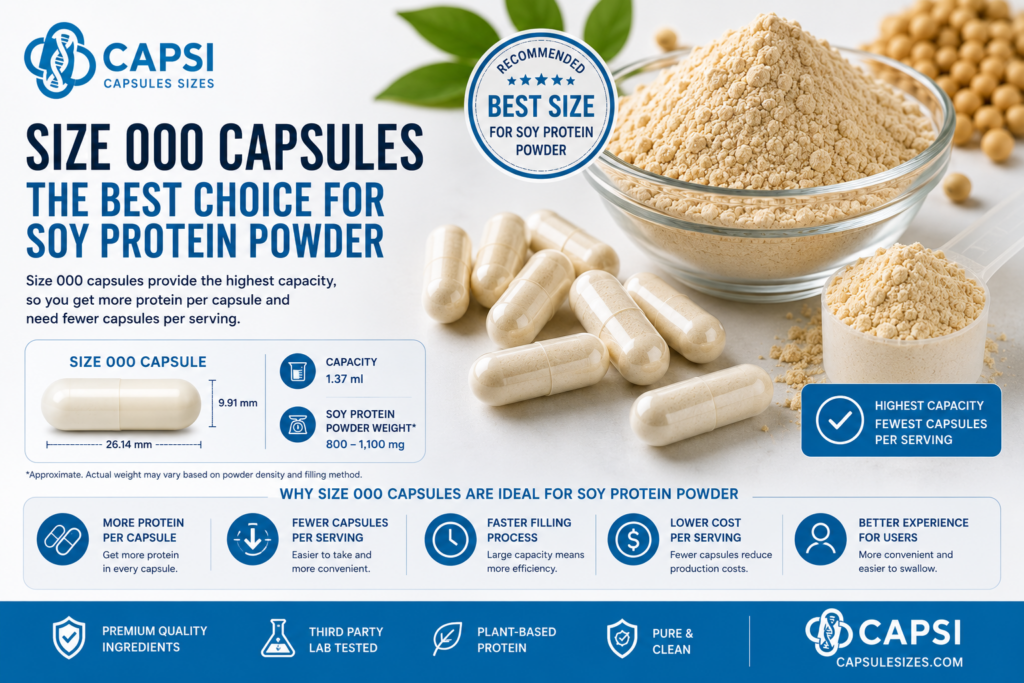
Size 000 capsules provide several advantages when encapsulating soy protein powder:
Higher Capacity
More powder fits into each capsule, reducing the number required per serving.
Faster Filling
Larger capsules are often easier and faster to fill using manual or automatic capsule filling machines.
Better User Experience
Taking fewer capsules is generally more convenient for users.
Lower Packaging Costs
Fewer capsules can mean lower packaging and manufacturing costs.
For these reasons, size 000 capsules are often the preferred choice for protein powders.
How Much Soy Protein Fits in a Capsule?
The amount of soy protein that fits into a capsule depends largely on powder density.
Typical estimates are:
Size 000 Capsules
- Approximately 800–1,100 mg
- Best for larger servings
- Most popular choice
Size 00 Capsules
- Approximately 550–850 mg
- Easier to swallow
- Requires more capsules per serving
Size 0 Capsules
- Approximately 400–650 mg
- Suitable for smaller doses
- Often used in custom blends
How Many Capsules Do You Need?
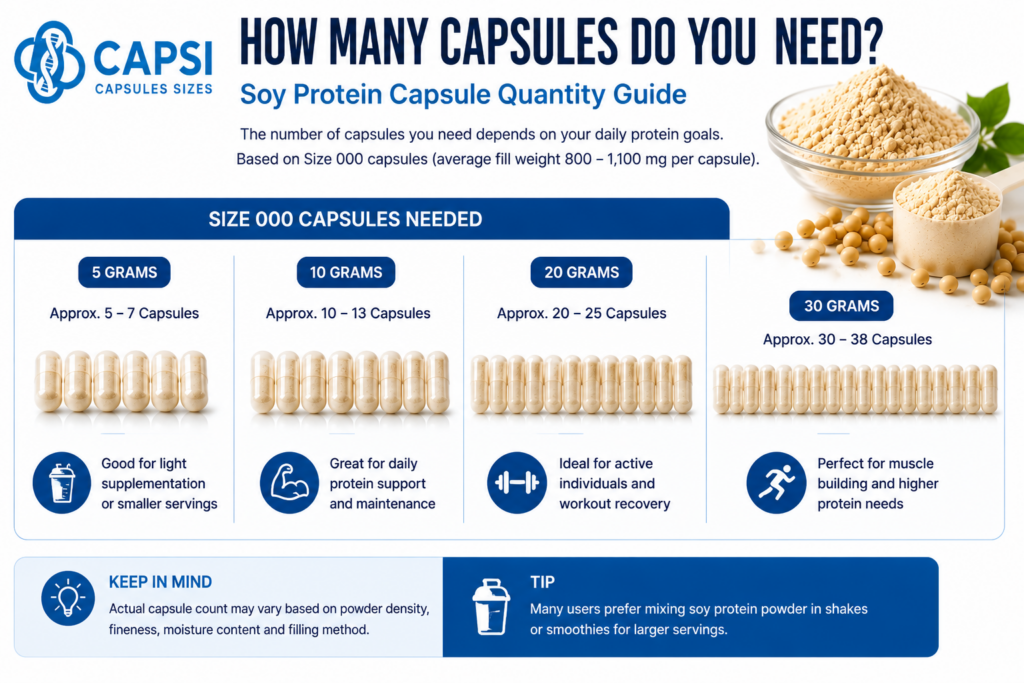
Because protein is usually consumed in gram quantities rather than milligrams, multiple capsules are often needed.
Capsule Requirements Using Size 000 Capsules
| Desired Protein Amount | Approximate Capsules Needed |
|---|---|
| 5 g | 5–7 capsules |
| 10 g | 10–13 capsules |
| 15 g | 15–19 capsules |
| 20 g | 20–25 capsules |
| 30 g | 30–38 capsules |
Users taking larger protein servings may find shakes more convenient, while capsules work well for smaller daily supplementation.
Soy Protein Isolate vs Soy Protein Concentrate
The form of soy protein you use can influence capsule fill weights.
Soy Protein Isolate
- Higher protein concentration
- Lower fat and carbohydrate content
- Often finer in texture
- May pack more efficiently
Soy Protein Concentrate
- Less processed
- Contains more carbohydrates and fibre
- Slightly lower protein percentage
- Can be bulkier
Testing fill weights with your specific powder is always recommended.
Factors Affecting Capsule Fill Weight
Several factors influence how much soy protein powder fits inside a capsule:
Powder Density
Denser powders pack more efficiently and allow higher fill weights.
Particle Size
Finer powders typically occupy less space.
Moisture Content
Powders with higher moisture content may clump and reduce filling efficiency.
Filling Method
Machine-filled capsules often achieve higher fill weights than manual filling.
Compression
Tamping or compressing powder can significantly increase capacity.
HPMC vs Gelatin Capsules
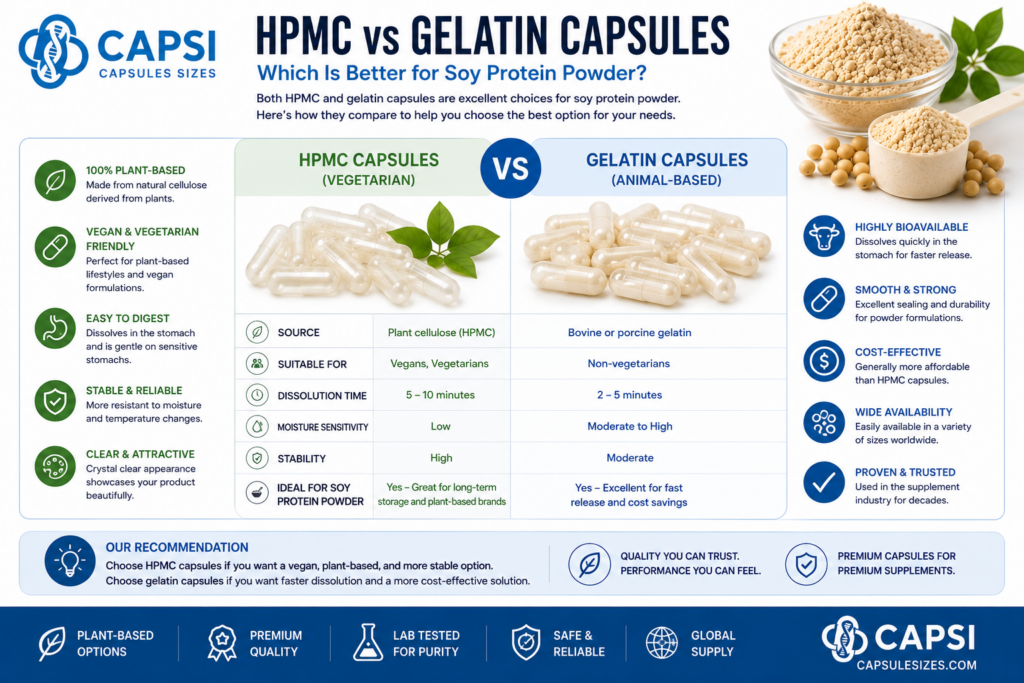
Soy protein powder can be filled into either HPMC or gelatin capsules.
HPMC Capsules
HPMC (Hydroxypropyl Methylcellulose) capsules are:
- Vegetarian
- Vegan-friendly
- Plant-based
- Suitable for a wide range of users
Many soy protein consumers prefer HPMC capsules because they align with vegan and vegetarian lifestyles.
Gelatin Capsules
Gelatin capsules are:
- Cost-effective
- Widely available
- Fast dissolving
- Easy to fill
The choice between HPMC and gelatin often depends on dietary preferences and formulation requirements.
Are Soy Protein Capsules Suitable for Vegans?
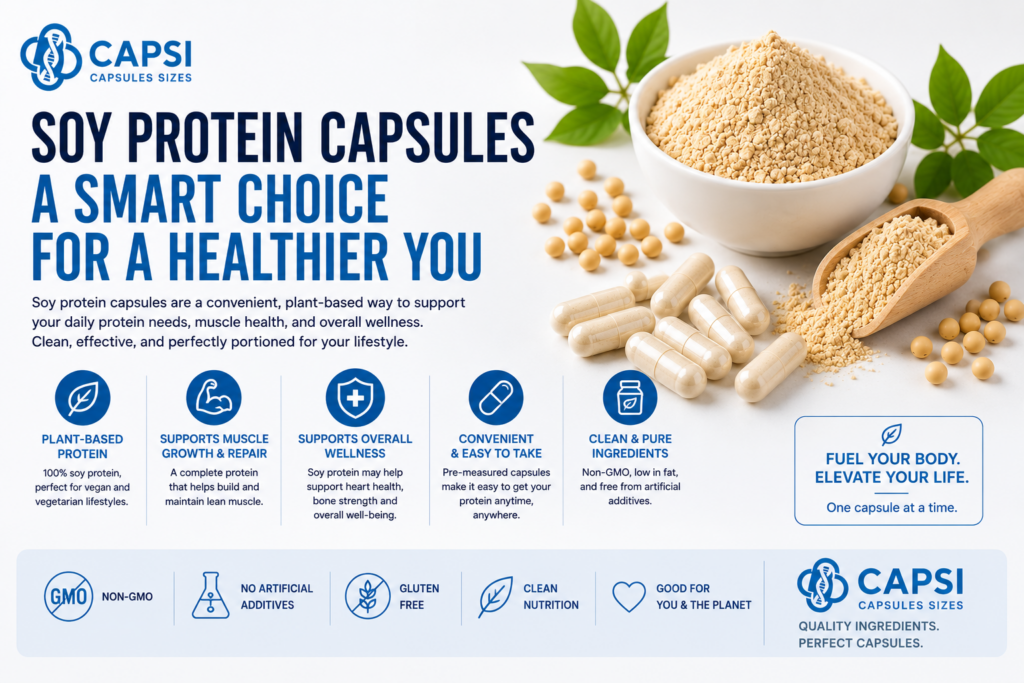
Yes. When soy protein powder is combined with HPMC capsules, the resulting product is completely plant-based and suitable for vegans and vegetarians.
This makes soy protein one of the most popular protein choices for plant-based supplement formulations.
Can You Fill Soy Protein Using Capsule Machines?
Yes. Soy protein powder works well with:
- Manual capsule fillers
- Semi-automatic machines
- Automatic capsule filling equipment
Larger capsule sizes such as size 000 and size 00 are commonly used in commercial capsule production.
When filling protein powders, ensure the powder flows freely and is not excessively moist.
Tips for Encapsulating Soy Protein Powder
For best results:
- Use dry, fine powder.
- Choose size 000 capsules where possible.
- Use a capsule filling machine for consistency.
- Store capsules in airtight containers.
- Add desiccants if long-term storage is required.
Proper storage helps maintain capsule integrity and prevents moisture absorption.
How to Store Soy Protein Capsules
Finished capsules should be stored:
- In cool, dry conditions
- Away from direct sunlight
- In airtight containers
- With food-safe desiccants if necessary
Proper storage can help maximize shelf life and maintain powder quality.
Which Capsule Size Should You Choose?
For most users:
- Size 000: Best overall choice
- Size 00: Good balance between capacity and swallowability
- Size 0: Better for smaller servings
If your goal is to maximize protein per capsule, size 000 capsules are generally recommended.
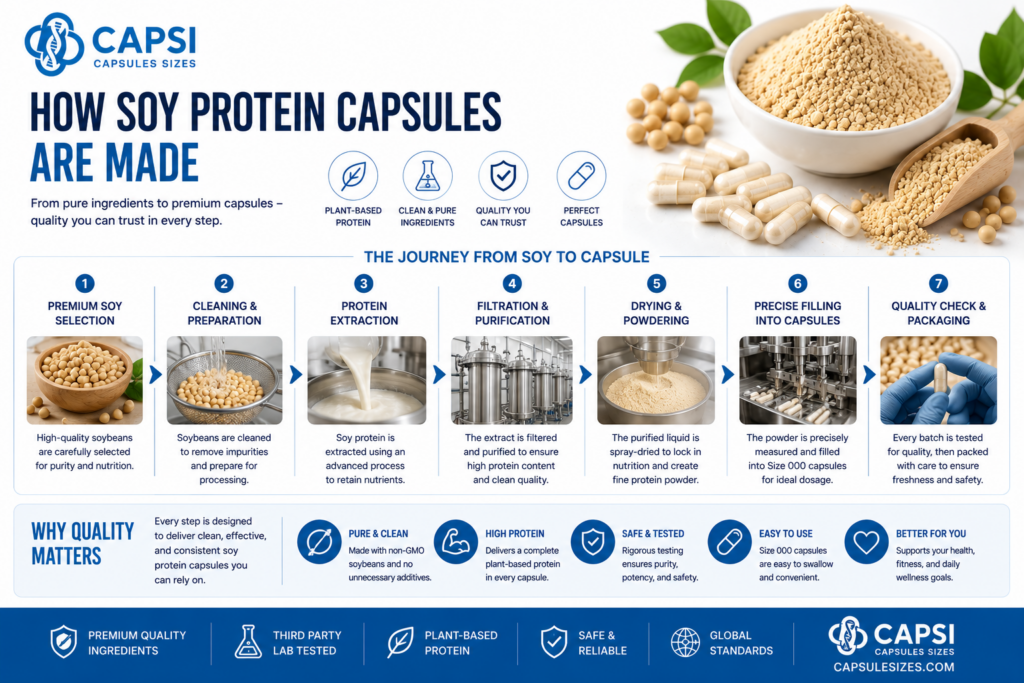
Frequently Asked Questions
What is the best capsule size for soy protein powder?
Size 000 capsules are usually the best choice because they hold the most powder and reduce the number of capsules needed.
How much soy protein fits in a size 000 capsule?
Most soy protein powders fit approximately 800–1,100 mg in a size 000 capsule.
Can soy protein be put into vegetarian capsules?
Yes. Soy protein powder can be filled into HPMC vegetarian capsules.
How many capsules equal 10 grams of soy protein?
Typically, around 10–13 size 000 capsules are needed for a 10-gram serving.
Is soy protein isolate better for capsules?
Soy protein isolate often packs more efficiently due to its finer texture and higher protein concentration.
Can soy protein capsules be made at home?
Yes. Many users encapsulate soy protein powder using manual capsule filling machines and empty capsules.
Final Thoughts
Soy protein powder is one of the most versatile and popular plant-based proteins available today. Whether you’re creating custom supplements, making vegan formulations, or simply looking for a convenient way to consume protein, capsules provide an effective solution.
For most users, size 000 capsules remain the best option because they maximize capacity while minimizing the number of capsules required.
By selecting the correct capsule size and using high-quality empty capsules, you can create convenient soy protein supplements tailored to your specific needs.
Related Pages
- Protein Powder Capsule Sizes
- Pea Protein Powder Capsule Sizes
- Rice Protein Powder Capsule Sizes
- Hemp Protein Powder Capsule Sizes
- Casein Protein Powder Capsule Sizes
- Whey Protein Isolate Capsule Sizes
- Whey Protein Concentrate Capsule Sizes
- Capsule Size Chart
- Capsule Capacity Chart
- Capsule Volume Chart
- Size 000 Capsules
- Size 00 Capsules
- Capsule Sizes Explained
- How Many mg Fit in a Capsule?
- Capsule Size Calculator
- Capsule Quantity Calculator
- How to Fill Capsules
- HPMC vs Gelatin Capsules
- Vegan Capsules Guide
- How to Store Capsules