
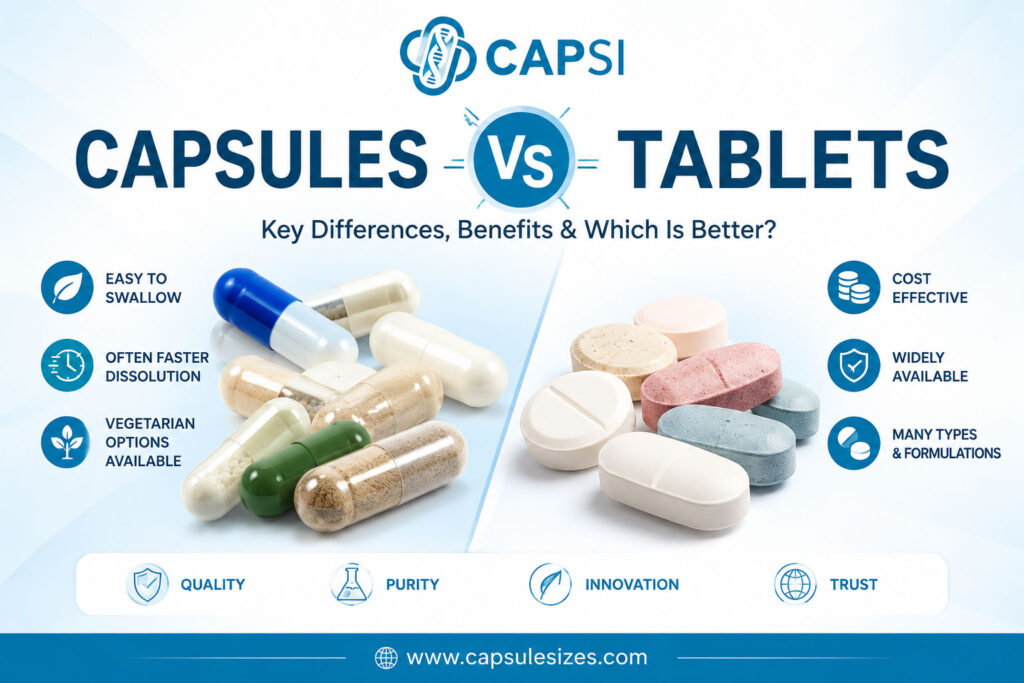
Capsules and tablets are two of the most common formats used for:
- supplements
- vitamins
- pharmaceuticals
- nutritional products
Although both deliver active ingredients, they differ in:
- appearance
- manufacturing
- dissolution
- swallowing experience
- ingredient compatibility
Understanding the differences between capsules and tablets can help users choose the format that best suits their needs.
What Are Capsules?
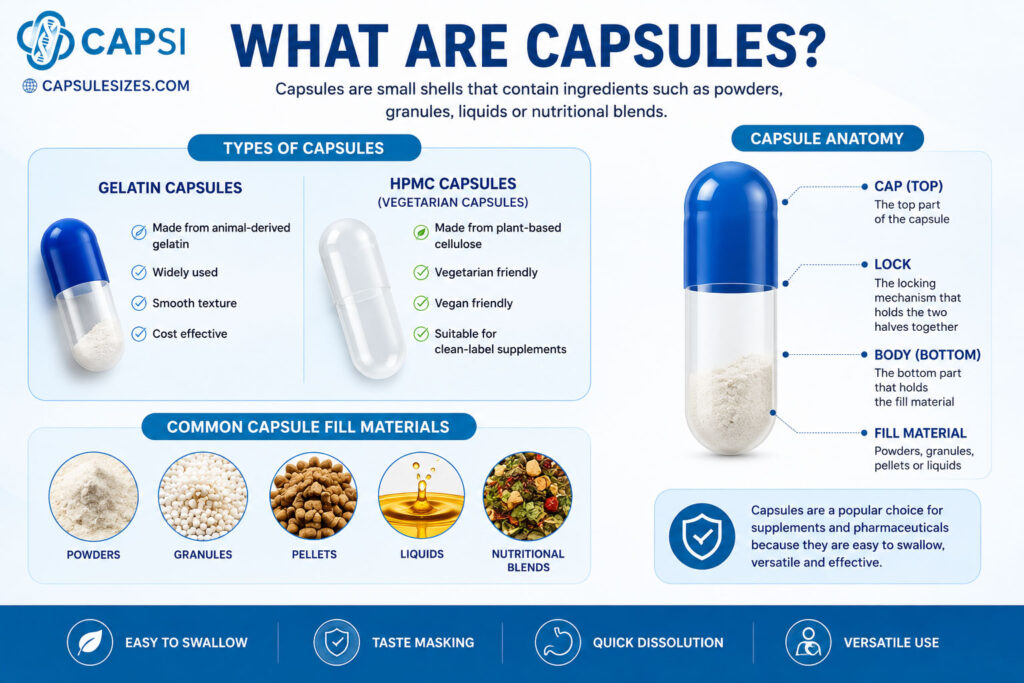
Capsules are small shells that contain ingredients such as:
- powders
- granules
- liquids
- nutritional blends
Common capsule types include:
- gelatin capsules
- HPMC vegetarian capsules
Capsules are widely used because they are:
- easy to swallow
- smooth in texture
- suitable for many supplement formulations
What Are Tablets?
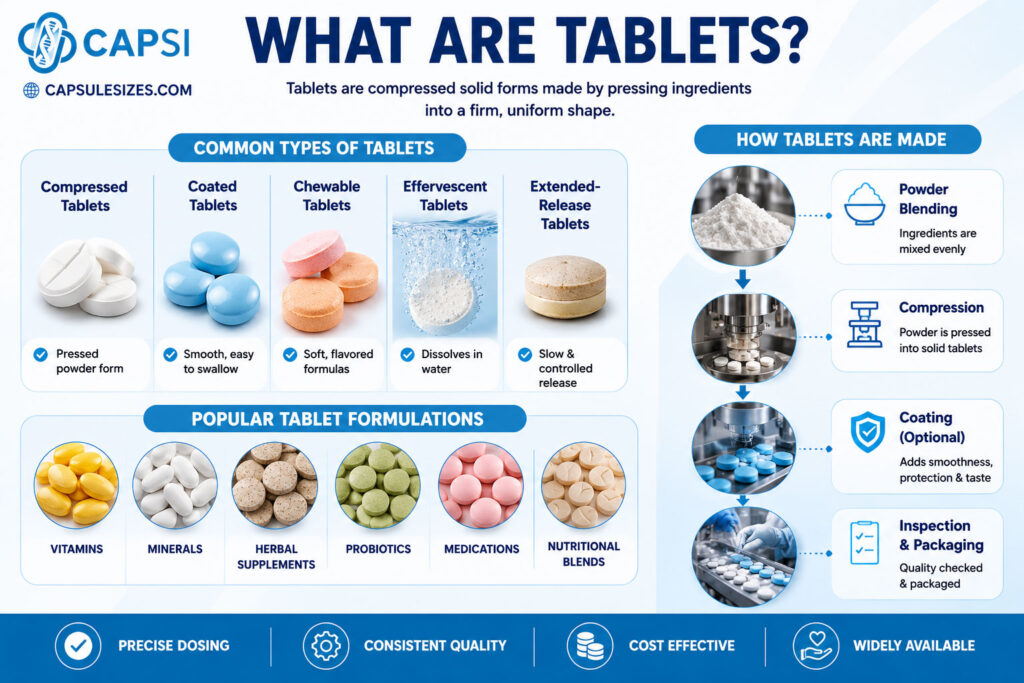
Tablets are compressed solid forms made by pressing ingredients together into a firm shape.
They are commonly used for:
- vitamins
- medications
- supplements
- minerals
Tablets are available in many forms including:
- coated tablets
- chewable tablets
- effervescent tablets
- extended-release tablets
Key Differences Between Capsules and Tablets
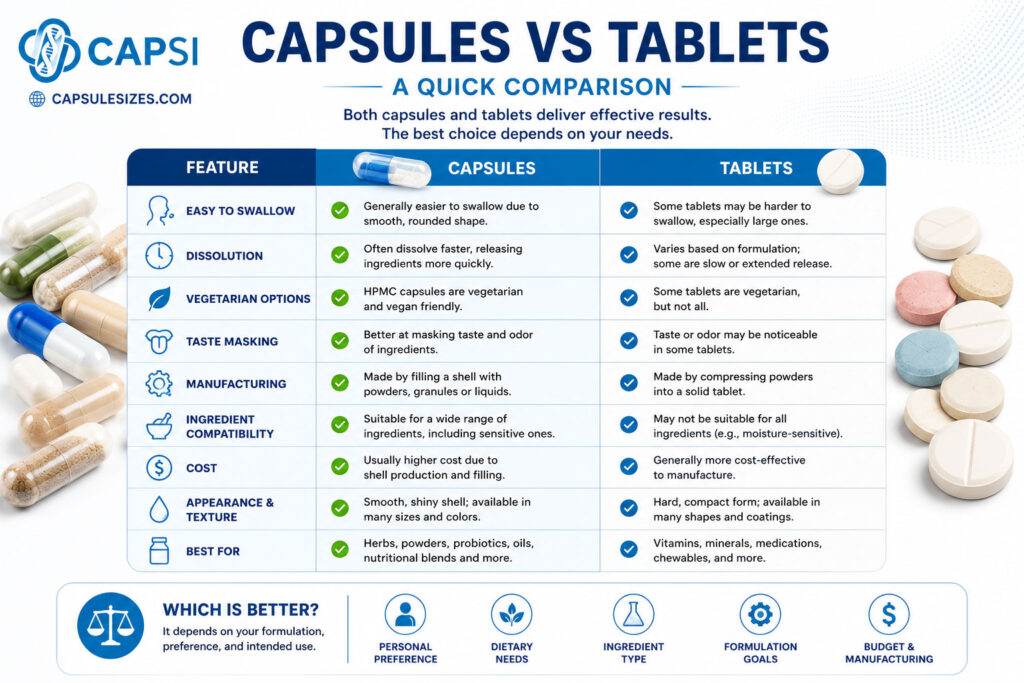
| Feature | Capsules | Tablets |
|---|---|---|
| Texture | Smooth shell | Hard compressed surface |
| Swallowing | Often easier | Sometimes harder |
| Manufacturing | Filled shell | Compressed powder |
| Ingredient Taste | Usually masked | Sometimes noticeable |
| Vegetarian Options | HPMC available | Some available |
| Dissolution | Often quicker | Varies |
| Appearance | Two-piece shell | Solid compressed form |
Are Capsules Easier to Swallow?
Many people find capsules easier to swallow because:
- they have a smooth outer shell
- they slide more easily with water
- they often have rounded edges
Larger tablets may sometimes feel:
- chalky
- dry
- harder to swallow
However, swallowing preference varies between individuals.
Do Capsules Dissolve Faster Than Tablets?
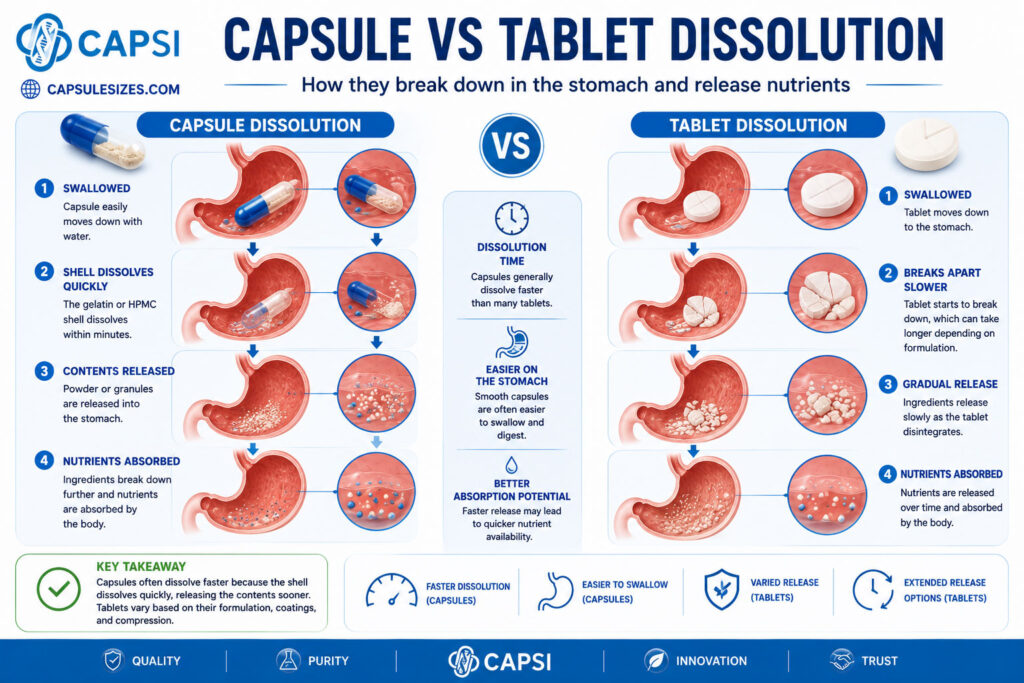
Capsules are often considered to dissolve more quickly than many tablets.
This is because:
- capsule shells can dissolve rapidly
- powders inside capsules may disperse quickly
Tablet dissolution speed depends on factors such as:
- compression force
- coating
- tablet type
- formulation
Some tablets are specifically designed for:
- slow release
- extended release
- delayed release
Gelatin vs HPMC Capsules
Two of the most common capsule materials are:
- gelatin
- HPMC (Hydroxypropyl Methylcellulose)
Gelatin Capsules
- animal-derived
- widely used
- smooth texture
- cost effective
HPMC Capsules
- plant-based
- vegetarian friendly
- vegan friendly
- suitable for clean-label supplements
Both capsule types are commonly used in supplements and pharmaceuticals.
Are Tablets More Affordable Than Capsules?
Tablets are often less expensive to manufacture because they are:
- compressed directly
- efficient to mass produce
- widely used in pharmaceutical manufacturing
Capsules may cost more due to:
- shell production
- filling processes
- capsule materials
Which Is Better – Capsules or Tablets?
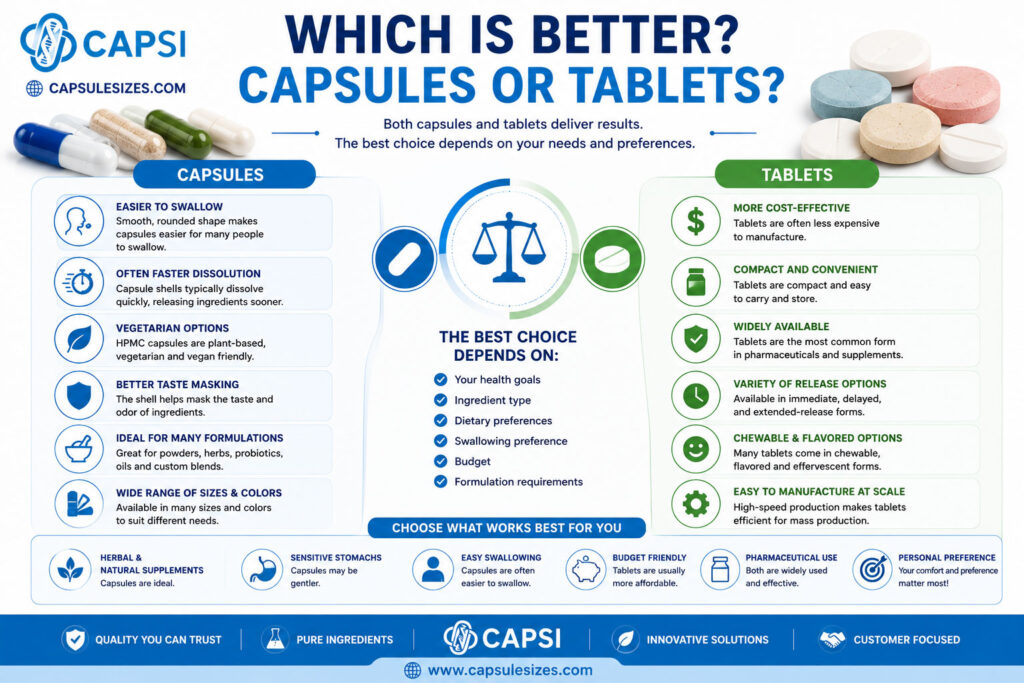
Neither format is universally better.
The best option depends on:
- ingredient type
- swallowing preference
- dietary requirements
- formulation goals
- manufacturing needs
Some users prefer capsules because they are:
- easier to swallow
- smoother
- available in vegetarian forms
Others prefer tablets because they are:
- compact
- widely available
- often lower cost
Capsules vs Tablets for Supplements
Capsules are commonly used for:
- herbs
- mushroom powders
- probiotics
- nutritional blends
- custom formulations
Tablets are commonly used for:
- compressed vitamins
- minerals
- pharmaceutical products
- chewable supplements
Can Capsules Hold More Powder Than Tablets?
Capsule capacity depends on:
- capsule size
- powder density
Common capsule sizes include:
- 000
- 00
- 0
- 1
- 2
- 3
- 4
Larger capsules such as size 000 or 00 can hold significant amounts of powder.
Are Capsules Vegetarian?
Some capsules are vegetarian while others are not.
Vegetarian Capsules
Usually made from:
- HPMC
- plant-derived cellulose
Non-Vegetarian Capsules
Usually made from:
- gelatin
- animal-derived collagen
Tablets may also contain animal or plant-based ingredients depending on formulation.
Capsules vs Tablets – Quick Comparison
| Category | Capsules | Tablets |
|---|---|---|
| Easy to Swallow | Often easier | Sometimes harder |
| Vegetarian Options | Yes | Sometimes |
| Dissolution | Often faster | Variable |
| Cost | Higher | Lower |
| Taste Masking | Better | Variable |
| Custom Filling | Easy | More difficult |
Frequently Asked Questions
Are capsules better than tablets?
Neither is universally better. The best option depends on the intended use and personal preference.
Do capsules dissolve faster than tablets?
Capsules are often considered to dissolve more quickly than many tablets.
Are capsules easier to swallow?
Many users find capsules easier to swallow because of their smooth outer shell.
Are all capsules vegetarian?
No. Gelatin capsules are animal-derived while HPMC capsules are vegetarian friendly.
Why are tablets cheaper?
Tablets are often more cost-effective to mass produce.
Can capsules hold powder?
Yes. Capsules are commonly used for powders, herbs, supplements, and nutritional blends.