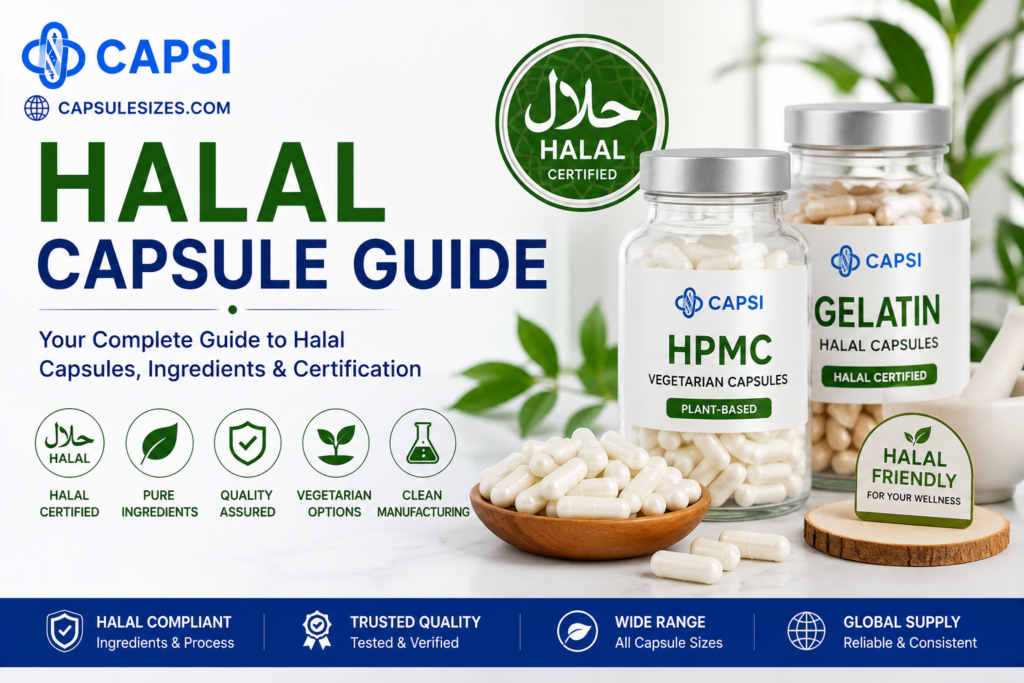
Halal capsules are capsules manufactured using ingredients and processes that comply with Islamic dietary requirements.
They are commonly used for:
- supplements
- vitamins
- herbal products
- nutraceuticals
- wellness products
As demand for halal supplements grows worldwide, many consumers want to know:
- what makes a capsule halal
- whether gelatin capsules are halal
- if vegetarian capsules are halal
- how halal certification works
This guide explains everything you need to know about halal capsules.
What Does “Halal” Mean?
“Halal” is an Arabic term meaning:
permissible
under Islamic law.
For supplements and capsules, halal requirements generally relate to:
- ingredient sourcing
- manufacturing processes
- contamination prevention
- processing methods
Products that contain prohibited ingredients are considered:
haram
(not permissible).
What Are Halal Capsules?
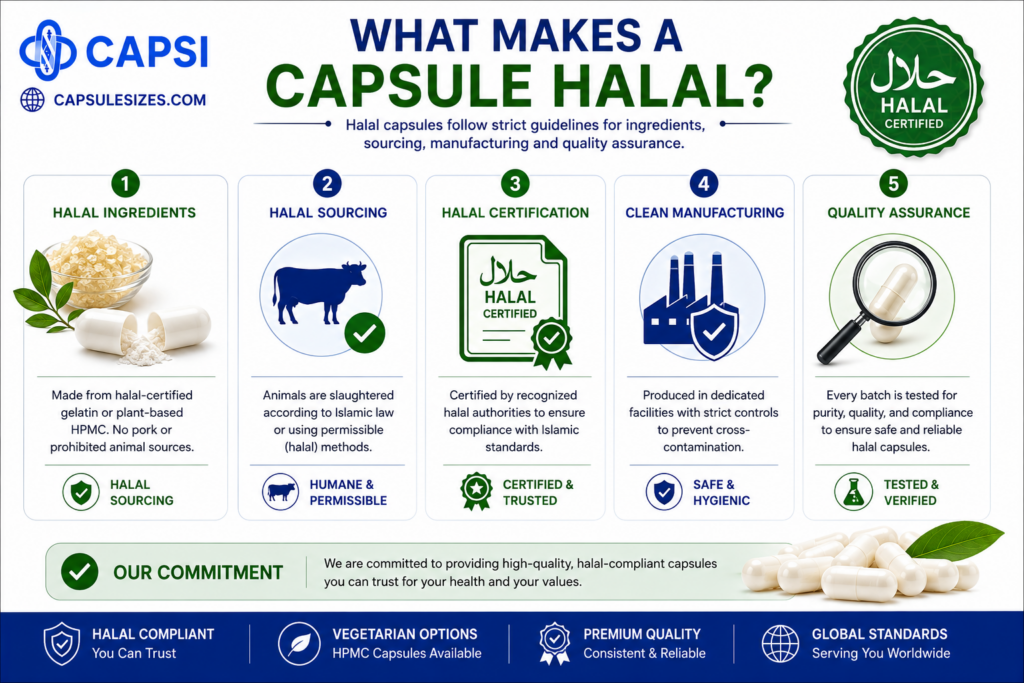
Halal capsules are capsule shells made using halal-compliant ingredients.
These capsules may include:
- halal-certified bovine gelatin
- fish gelatin
- HPMC vegetarian capsules
They must also be produced in facilities that prevent:
- cross contamination
- prohibited animal ingredients
- non-halal processing materials
Are Gelatin Capsules Halal?
Some gelatin capsules are halal, while others are not.
It depends on:
- the source of the gelatin
- how the animals were processed
- certification standards
Halal Gelatin Capsules
Halal gelatin capsules are usually made from:
- halal-certified bovine gelatin
- properly sourced fish gelatin
These capsules are manufactured according to halal standards and may carry halal certification.
Non-Halal Gelatin Capsules
Gelatin capsules may not be halal if they are made from:
- pork gelatin
- non-certified bovine gelatin
- unclear animal sources
This is why certification and sourcing are important.
Are Vegetarian Capsules Halal?
In many cases:
yes
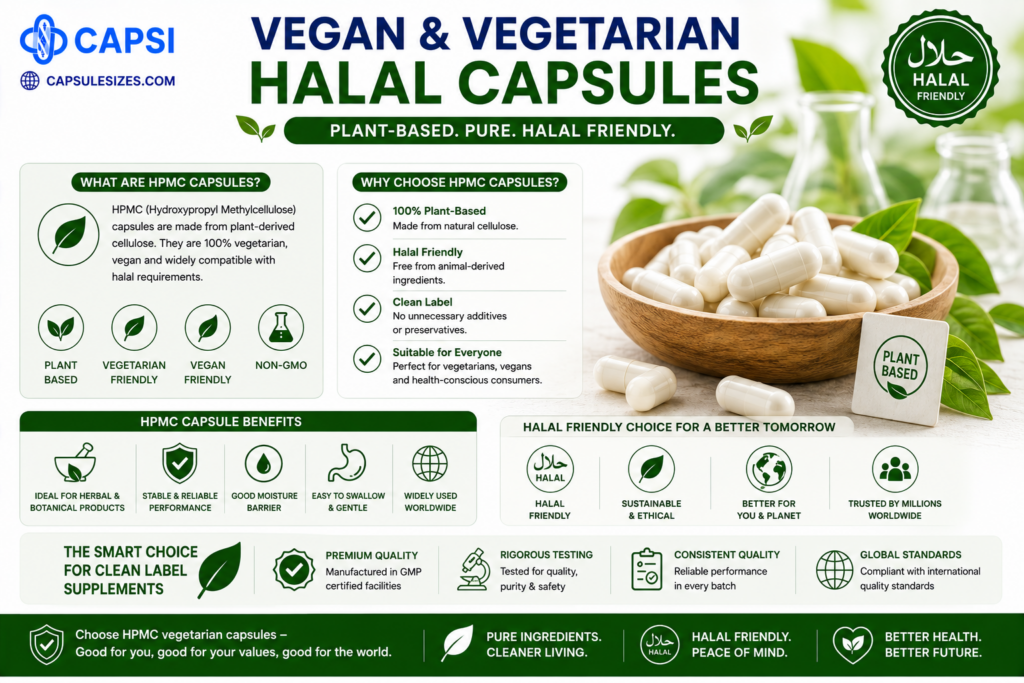
Vegetarian capsules made from:
- HPMC (Hydroxypropyl Methylcellulose)
are generally considered halal because they are:
- plant-based
- animal-free
- vegetarian friendly
- vegan friendly
However, some consumers and organizations still prefer:
formal halal certification
for complete assurance.
What Are HPMC Capsules?
HPMC capsules are:
- plant-based capsules
- vegetarian capsules
- vegan capsules
They are commonly made from:
- cellulose derived from plants
HPMC capsules are widely used because they:
- contain no animal ingredients
- are suitable for vegetarian and vegan diets
- are often compatible with halal requirements
Halal Gelatin vs HPMC Capsules
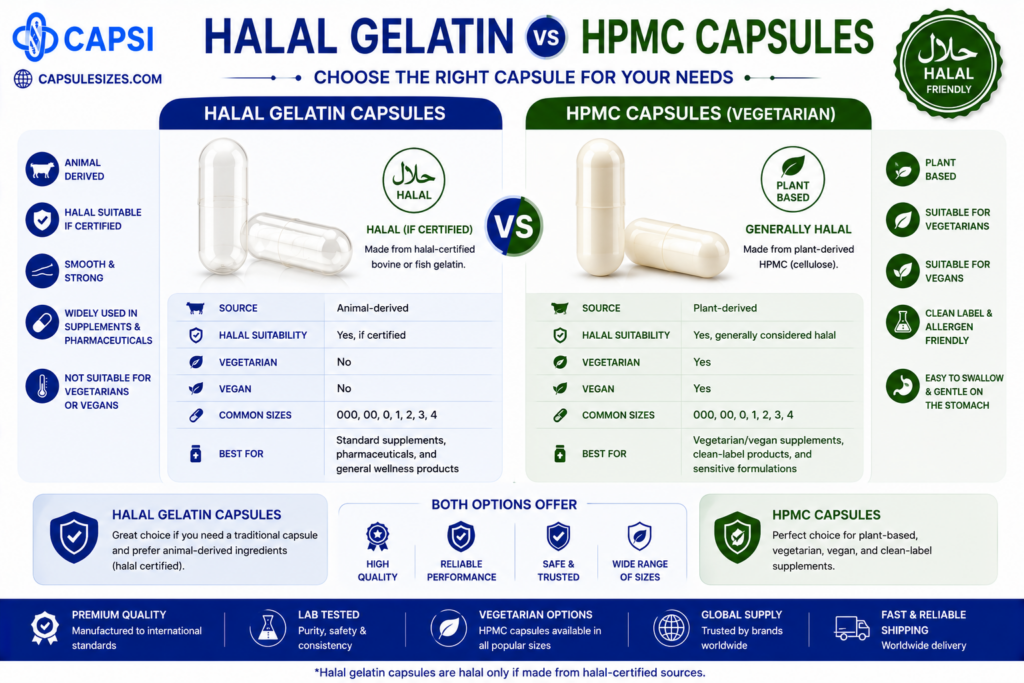
| Feature | Halal Gelatin Capsules | HPMC Capsules |
|---|---|---|
| Source | Animal-derived | Plant-based |
| Halal Suitable | If certified | Usually yes |
| Vegetarian | No | Yes |
| Vegan | No | Yes |
| Popular Uses | Supplements & pharmaceuticals | Supplements & clean-label products |
Why Halal Certification Matters
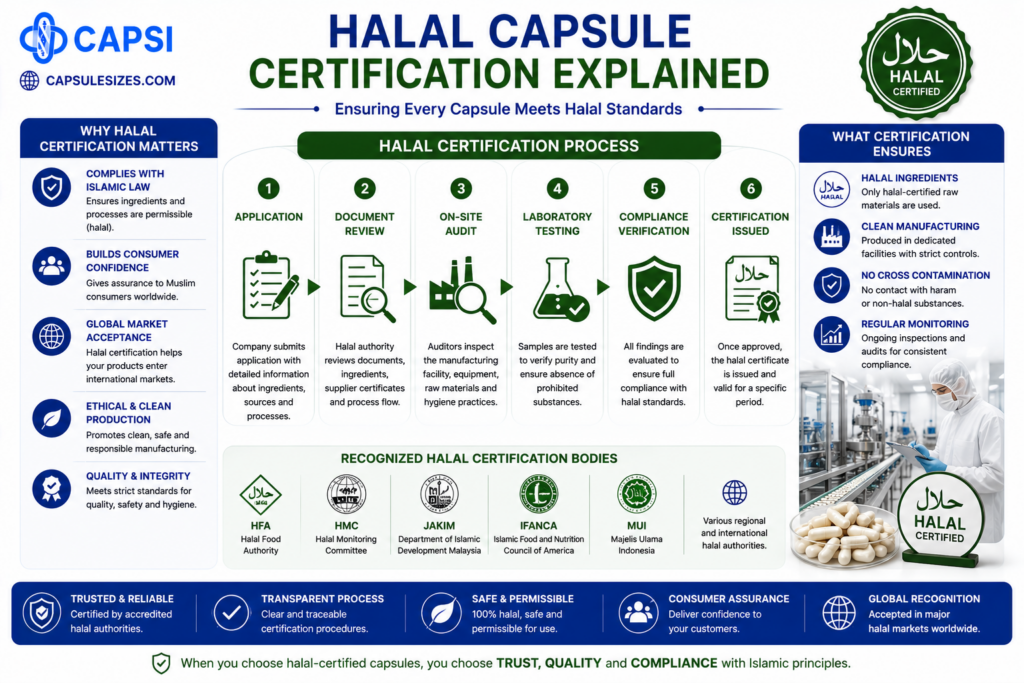
Halal certification helps confirm that:
- ingredients comply with halal standards
- manufacturing processes are controlled
- contamination risks are minimized
- the supply chain meets halal requirements
Certification is especially important for:
- international markets
- Muslim consumers
- export products
- supplement brands
Common Halal Certification Bodies
Examples include:
- Halal Food Authority (HFA)
- Halal Monitoring Committee (HMC)
- JAKIM
- IFANCA
- MUI
Different regions may recognize different certification organizations.
Are Empty Capsules Halal?
Empty capsules can be halal if they use:
- halal-certified gelatin
or - plant-based HPMC materials
Always check:
- ingredient sourcing
- supplier information
- certification documents
How to Choose Halal Capsules
When selecting halal capsules, consider:
- capsule material
- halal certification
- gelatin source
- vegetarian requirements
- manufacturing quality
Many consumers choose:
HPMC capsules
because they are:
- plant-based
- vegetarian
- widely accepted
- suitable for many dietary preferences
Best Capsule Sizes for Halal Supplements
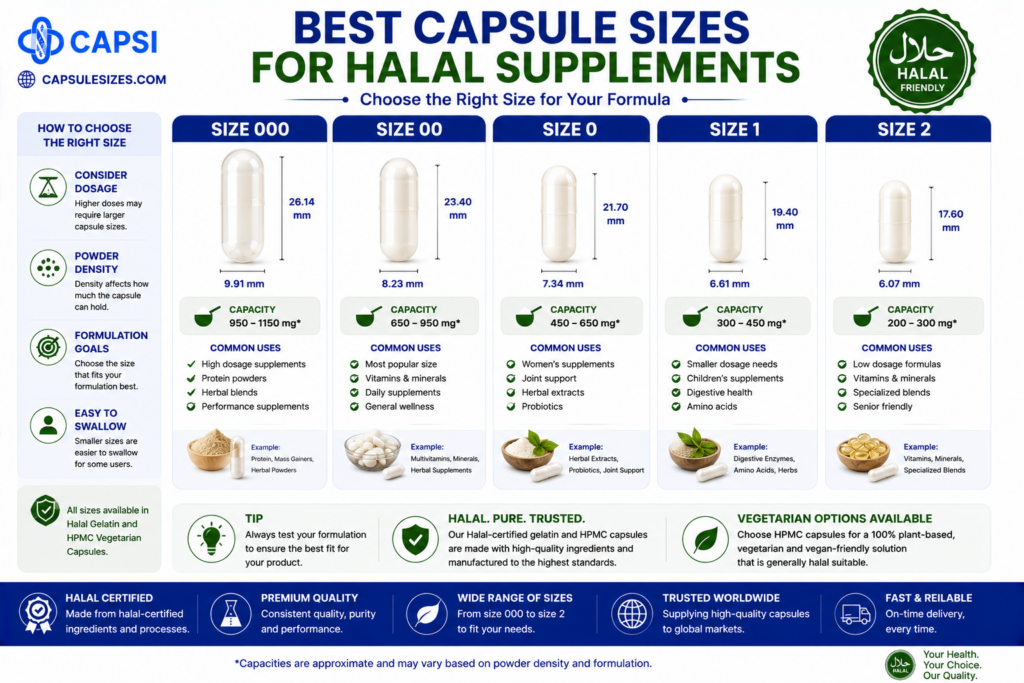
Common capsule sizes include:
| Capsule Size | Typical Use |
|---|---|
| 000 | Large powder servings |
| 00 | Popular supplement size |
| 0 | Daily wellness supplements |
| 1 | Smaller serving sizes |
| 2 | Compact formulations |
The best size depends on:
- powder density
- serving size
- formulation goals
Benefits of Halal Capsules
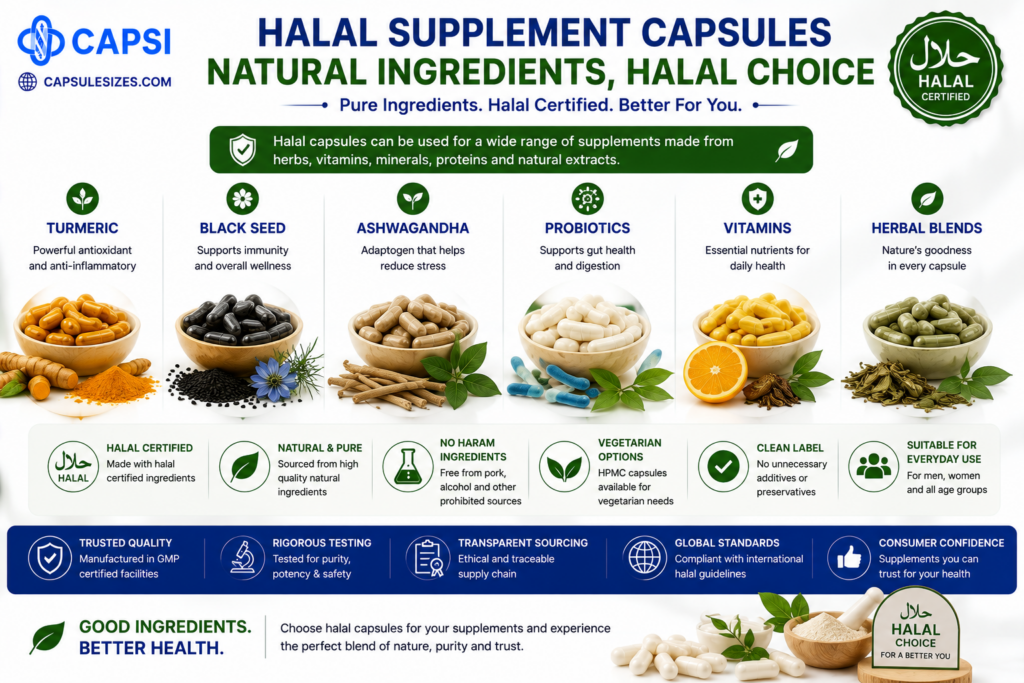
Halal capsules may offer:
- halal dietary compatibility
- consumer confidence
- wider market acceptance
- vegetarian options
- clean-label appeal
They are increasingly popular in:
- sports nutrition
- wellness supplements
- herbal products
- pharmaceutical applications
Frequently Asked Questions
Are all gelatin capsules halal?
No. Some gelatin capsules are made from non-halal animal sources.
Are HPMC capsules halal?
HPMC capsules are generally considered halal because they are plant-based.
What capsules are suitable for Muslims?
Halal-certified gelatin capsules and HPMC vegetarian capsules are commonly suitable.
Are vegan capsules halal?
In many cases yes, especially if they contain no prohibited ingredients.
What is halal gelatin made from?
Usually halal-certified bovine gelatin or fish gelatin.
Are empty capsules halal?
Some are. Always check certification and ingredient sourcing.